Get your fix of everything retro — specialists in imported & rare retroImported & Rare Retro

Shop By
Why buy Japanese imports?
Japanese imports hold a special pull for retro gamers, and once you fall down the rabbit hole, it’s hard to climb back out. Japan has been the home of gaming…

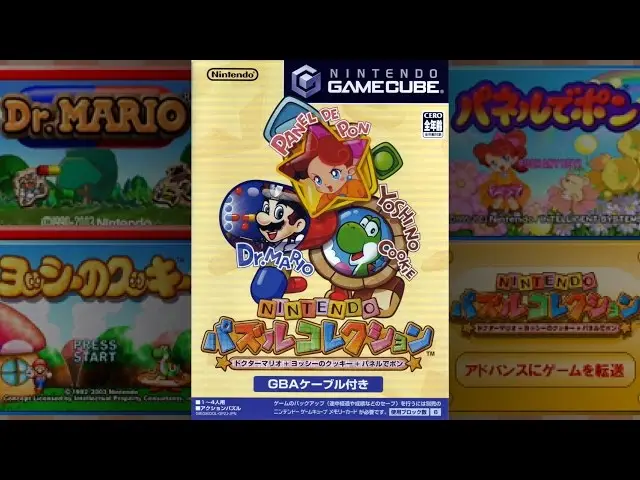
Japanese imports hold a special pull for retro gamers, and once you fall down the rabbit hole, it’s hard to climb back out. Japan has been the home of gaming since the very beginning, with Nintendo, Sega, and Sony all originating there. When the industry’s biggest names grow up in one country, that country naturally gets first dibs on a lot of the good stuff. So if you’ve ever found yourself eyeing a Japanese cartridge or disc and wondering whether it’s worth the hassle, this guide is for you.
The short answer is yes, it usually is. But there’s a bit more to it than just clicking “buy now” on a listing from Tokyo. Let’s walk through why import gaming is so rewarding, what you can actually play, and how to get those region-locked machines to cooperate.
A treasure trove of games that never left Japan
Gaming is woven deeply into Japanese culture, and that means a huge number of titles were made specifically for that market. Many of these games never saw a release anywhere else in the world. We’re not talking about a handful of obscure oddities, either. Entire genres, beloved series entries, and cult classics simply stayed put, leaving Western collectors to either import them or miss out entirely.
Here’s the encouraging part: plenty of these Japan-only games are perfectly playable even if you don’t read a word of Japanese. Puzzle games, shoot-’em-ups, racers, fighters, and rhythm titles often need little to no language knowledge to enjoy. The action does the talking. Even some RPGs and adventure games are manageable with a fan-made translation guide open on your phone. So the language barrier that scares a lot of people off is, in reality, far lower than it looks.
Why certain consoles are import goldmines
Some machines are absolute treasure chests when it comes to Japanese imports. The Sega Saturn and the Nintendo GameCube are prime examples of consoles with enormous, brilliant libraries of Japan-exclusive titles.
The Sega Saturn in particular is legendary among importers. It struggled commercially in the West, which meant Sega and its partners poured a flood of releases into the Japanese market that never crossed the ocean. Shoot-’em-up fans, especially, treat the Japanese Saturn as essential hardware. The GameCube has its own share of exclusives and region-specific gems that make hunting down Japanese copies genuinely worthwhile.
The catch is that these consoles, like most of their era, are region-locked. A machine bought outside Japan will typically refuse to boot a Japanese disc or cartridge straight out of the box. Frustrating, yes, but very much solvable.
Getting around region-locking
This is where a little knowledge saves a lot of headaches. Region-locking sounds like a brick wall, but it’s one that retro gamers have been climbing over for decades, and there are several well-established ways to do it.
The approach depends on the console:
- Boot discs and cheat cartridges. Devices like the Datel Freeloader for the GameCube let you launch import games without modifying the console at all. You boot the disc first, then swap in your imported game. It’s the least invasive option, though it can occasionally cause minor display quirks in a few titles.
- Region-switch mods. Some consoles can be physically modified so a switch lets you flip between regions. On the Japanese GameCube, for example, there’s a known mod that repurposes the reset switch into a region selector, only needing to be in the right position when you insert a new disc.
- Mod chips. For a more permanent, all-in-one fix, a mod chip is the gold standard.
Mod chips: the Xeno GC explained
Mod chips such as the Xeno GC allow booting of all-region games and require only moderate skills to install. The Xeno GC is a small “drive chip” for the Nintendo GameCube that installs directly onto the optical drive’s logic board. Rather than touching the main board, it taps into the drive’s debug interface and injects patch code as the disc loads, unlocking the drive so it can read games from any region.
What makes it popular is how approachable the install is. It typically requires soldering just six points, and you don’t need to remove the motherboard to fit it. Two status LEDs tell you whether it’s working: one lights up while the chip is patching the drive, and another confirms a successful install. Once it’s in, you get region-free loading across PAL, NTSC-U, and NTSC-J, plus handy extras like forcing a display mode by holding a button on the controller as a game boots.
A quick word of honesty before you grab one: “moderate skills” is a fair description. If you’ve never held a soldering iron, the Xeno GC is a very doable first project, but practice on something scrap first. Be aware, too, that the original design was open-sourced back in 2011, so the market is now full of clones of varying quality. Clones can have alignment issues over the debug port, so a wired install is often more reliable than relying on the chip’s pads lining up perfectly. And as always, opening your console means accepting the small risk that comes with any hardware mod, so go in with a clear head and the right tools.