Get your fix of everything retro — specialists in imported & rare retroImported & Rare Retro

Shop By
The Ultimate Guide to Handheld Game Consoles: From Retro Classics to Modern Marvels
Trying to find the perfect handheld game console in today's market can feel like a quest in itself. Are you lost in a sea of options, from cherished...


Trying to find the perfect handheld game console in today’s market can feel like a quest in itself. Are you lost in a sea of options, from cherished original Game Boys to powerful new Steam Decks? Do you find yourself wondering whether to hunt for authentic hardware or trust a modern emulator? The fear of landing a faulty or fake retro console is real, and it can be overwhelming trying to figure out which machine will actually play your favourite iconic games.
Worry no more! For the love of everything retro, we’ve created this ultimate guide to cut through the confusion. We’ll take you on a journey through the history of portable gaming, break down the pros and cons of different eras, and give you the expert knowledge to choose the right console for your budget and your collection. Get ready to confidently find your next portable powerhouse and recapture that pure, unadulterated joy of gaming on the go.
The Golden Eras of Handheld Gaming: A Nostalgic Journey
Before we had 4K gaming on our TVs, the battle for our attention was fought on tiny, pixelated screens in school playgrounds and on long car journeys. The evolution of the handheld game console is a story of incredible innovation, fierce rivalries, and cherished memories. This journey from simple monochrome beginnings to pocket-sized powerhouses defines a generation of gamers. The complete history of handheld game consoles is a fascinating tale, filled with iconic devices that paved the way for the portable power we enjoy today.
The 8-Bit Pioneers: Gaming on the Go is Born
It all started with an undisputed king: the Nintendo Game Boy. This grey brick, with its iconic green-tinged screen, wasn’t the most powerful, but its incredible battery life and a killer launch title in Tetris made it a global phenomenon. Rivals emerged, like the Sega Game Gear, which tempted us with a full-colour, backlit screen (and an infamous appetite for batteries), and the technically ambitious Atari Lynx. While impressive, they couldn’t dethrone the mighty Game Boy.
The 16/32-Bit Revolution: Colour and Power in Your Pocket
The 90s saw the arms race heat up. Nintendo masterfully iterated on its winning formula with the Game Boy Color and the legendary Game Boy Advance, which brought SNES-quality gaming to our pockets. This era also gave us cherished cult classics. The Neo Geo Pocket Color is still beloved for its fantastic ‘clicky’ micro-switched joystick, while the Sega Nomad was a bold, if battery-hungry, attempt to put a full Mega Drive in your hands.
The Modern Era Dawns: Dual Screens, 3D, and Multimedia
The 2000s redefined what a handheld could be. Nintendo did it again with the DS, whose dual-screen and touch-input design became a runaway success. Sony entered the fray with the PlayStation Portable (PSP), a sleek multimedia machine that promised console-quality graphics and movie playback on the go. The innovations from these two titans-touch controls, powerful 3D graphics, and online connectivity-laid the essential groundwork for the hybrid consoles we love today, like the Nintendo Switch and Steam Deck.
Choosing Your Path: Original Hardware vs. Modern Emulation
So, you’re ready to get your fix of portable gaming. The biggest decision you’ll face is a classic head-to-head: do you hunt down original, authentic hardware, or embrace the power of a modern emulation device? This choice defines your entire retro journey, shaping everything from cost and convenience to the very feel of the games in your hands. There’s no single right answer, but one path is definitely right for you.
The Magic of Authentic Hardware: The Real Deal
For the purist, nothing beats the real thing. Holding an original Game Boy or SEGA Game Gear is about connecting with a piece of history, a direct link to what the Science Museum beautifully documents as The Golden Eras of Handheld Gaming. The tactile click of a cartridge, the unique quirks of the screen, and the joy of collecting physical media create an unbeatable sense of nostalgia.
- Pros: Unmatched authenticity, the thrill of the hunt for physical games, a pure and cherished nostalgic experience.
- Cons: Original hardware is aging. Fading screens, poor battery life, and the rising cost of sought-after cartridges (with some titles fetching over £100) are real challenges.
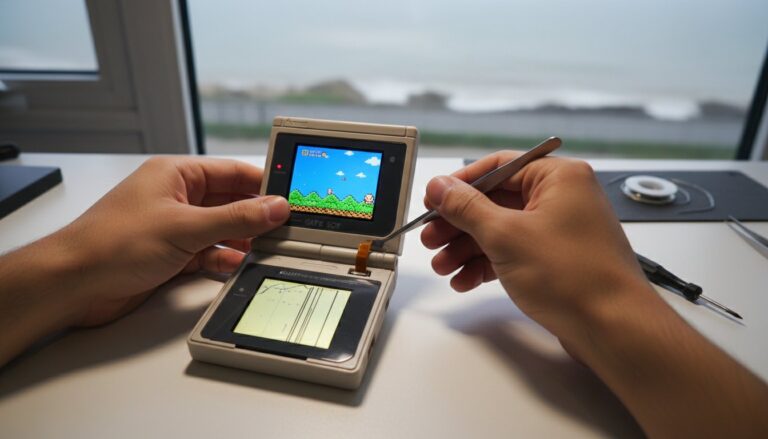
Thankfully, you can get the best of both worlds. Modding an original console with a modern IPS screen or a rechargeable battery pack can overcome its limitations while preserving that iconic feel.
The Power of Modern Retro Handhelds: All Your Games in One
Modern retro handhelds use emulation-clever software that allows new hardware to behave like an old console-to put entire game libraries in your pocket. A single modern handheld game console can play titles from dozens of different classic systems, all on a stunning, vibrant display with a battery that lasts for hours.
- Pros: Gorgeous modern screens, excellent battery life, USB-C charging, and convenient access to thousands of games on one device.
- Cons: The experience can lack the authentic charm of original hardware. Build quality varies between brands, and the initial setup can sometimes be tricky for newcomers.
Which is Right For You? A Quick Checklist
Still undecided? Let’s break it down to help you find your perfect match.
- Go for Original Hardware if… you are a collector at heart, love the tangible feel of cartridges, and prioritise pure, unfiltered nostalgia above all else.
- Go for a Modern Handheld if… you want maximum convenience, a vast and varied game library at your fingertips, and modern quality-of-life features.
- Consider a Modded Original if… you want that authentic retro feel but upgraded with the crisp screens and reliable battery life of today’s tech. It’s the ultimate enthusiast’s choice!
A Guide to Iconic Original Handhelds to Buy Today
Diving into the world of retro handhelds is a journey back in time, and picking your first classic is a special moment. For collectors, these devices represent key moments in the history of handheld gaming, offering a tangible connection to the past. We’ve selected three iconic systems that are accessible, beloved, and offer a perfect entry point into the hobby.
The Nintendo Game Boy Family (DMG, Color, Advance)
There’s no better place to start than with the family that defined portable gaming. The Game Boy, in its various forms, is the perfect first retro handheld game console thanks to its robust build and a legendary library of games. When buying, always check the battery compartment for acid corrosion from old batteries, and inspect original screens for vertical lines or screen burn. Buttons should feel responsive, not mushy. The modding scene is where these classics truly shine today. Popular upgrades include:
- IPS Screen Upgrades: Bright, vibrant, backlit screens that transform the playing experience.
- USB-C Charging: Ditch the AA batteries for a modern, rechargeable power solution.
- New Shells: Replace a tired, yellowed case with a fresh new look.
The Sony PlayStation Portable (PSP)
A genuine powerhouse for its time, the PSP is a collector’s dream. Not only does it have its own incredible library of games on UMD, but it’s also one of the best ways to play original PlayStation 1 classics on the go. Key models include the chunky ‘1000’, the refined ‘2000’ and ‘3000’ Slim & Lite versions, and the all-digital ‘Go’. Common faults to watch for include failing UMD drives that struggle to read discs, dead pixels on the screen, and a drifting analogue “nub” that causes unwanted character movement.
The Sega Game Gear
For the dedicated Sega fan, the Game Gear was a vibrant, full-colour marvel that took the fight to Nintendo in the 90s. However, time has not been kind to its internal components. Be warned: nearly all original units today suffer from failing capacitors. This can cause a dim or non-working screen, low or no audio, and even prevent the console from powering on. A full “re-cap” is not just a mod; it’s an essential restoration. To truly modernise it, consider an IPS screen replacement to fix the original’s motion blur and a rechargeable battery pack to solve its infamous appetite for AAs. Got a Game Gear that needs some love? Check out our repair services.
Navigating the World of Modern Emulation Handhelds
The world of retro gaming has exploded with a new breed of handheld game console dedicated to emulation. It’s a fast-moving, exciting scene! While our first love at MyRetroFix will always be authentic, original hardware, our passion for the hobby means we’re experts on these modern marvels too. We want you to have the best experience, so here’s our unbiased guide to help you make an informed choice if you venture down this path.
Key Brands to Know in 2025
Three names currently dominate the conversation, each with a distinct appeal for enthusiasts:
- Anbernic: Renowned for their premium, often metal-cased devices. They offer a massive range, focusing on solid build quality and a classic feel.
- Retroid: The champions of value. Retroid devices, like the popular Pocket series, often run Android, giving them great performance for their price and excellent versatility.
- Miyoo: Famous for creating the ultra-portable and community-beloved ‘Miyoo Mini’. They specialise in smaller, pocket-friendly devices that punch well above their weight.
Understanding Performance: What Can They Actually Play?
Performance is directly tied to price, so it’s crucial to set realistic expectations. As a general guide for the UK market:
- Under £80: These devices are masters of the 8-bit and 16-bit eras (NES, SNES, Mega Drive) and will handle most PlayStation 1 titles flawlessly.
- £80 – £150: This is the sweet spot for great N64 and Dreamcast emulation, offering a huge library of 3D classics at your fingertips.
- £150+: Powerhouses that can begin to tackle more demanding systems like the GameCube and even some PlayStation 2 titles.
Don’t forget the software! Community-developed firmware like OnionOS or GarlicOS can completely transform a device, unlocking its true potential with a better interface and optimised performance.
What to Look For: Screen, Controls, and Ergonomics
Beyond raw power, the physical feel of a device is what makes or breaks the experience. Pay close attention to:
- Screen: A crisp IPS display is a must. Consider the aspect ratio-a 4:3 screen is perfect for most retro systems, while 16:9 is better for PSP or modern indie games.
- Controls: The D-pad is king for 2D classics. For 3D games, look for devices with quality analogue sticks; premium models now feature Hall effect sticks which prevent the dreaded ‘stick drift’.
- Ergonomics: A tiny, pocketable device is great for portability, but a larger, sculpted grip will be far more comfortable for those long gaming sessions on the sofa.
Getting Started: Essential Tips for Your First Handheld
Congratulations! You’ve just unboxed a portal to countless adventures. Whether it’s a nostalgic Game Boy or a modern powerhouse, your new handheld game console is a special purchase. To help you get the most joy out of it from day one, here are our essential tips for every new owner, straight from one passionate hobbyist to another.
Must-Have Accessories for Any Portable Console
Protecting your investment, much like getting a professional survey on a property from experts like South Surveyors, is key to years of enjoyment. We see these not as optional extras, but as day-one essentials for keeping your console in pristine condition:
- A Good Carrying Case: This is non-negotiable. A sturdy, well-padded case is your first line of defence against the drops, bumps, and scratches of daily life.
- Screen Protectors: For just a few quid, a tempered glass or film screen protector is the cheapest insurance you can buy against permanent marks on that precious display.
- Reliable Power: Don’t risk your console with a cheap, uncertified charger. Invest in a quality power adapter and consider a portable power bank to keep the game going on long journeys.
Building Your Game Collection
Now for the best part-the games! There’s an unmatched, nostalgic joy in slotting in an original cartridge and seeing that iconic title screen flicker to life. Hunting for those cherished classics is a core part of the retro experience. For ultimate convenience, many collectors also use Flash Carts (like the popular EverDrive series), which allow you to load your legally-owned game ROMs onto a single cartridge-perfect for travel!
When buying original games, always be vigilant. Look out for poor-quality labels, incorrect cartridge colours, and cheap-feeling plastic to spot fakes. For peace of mind, always buy from a trusted specialist. Get your fix of authentic retro games here!
Maintaining Your Console: Care and Repair
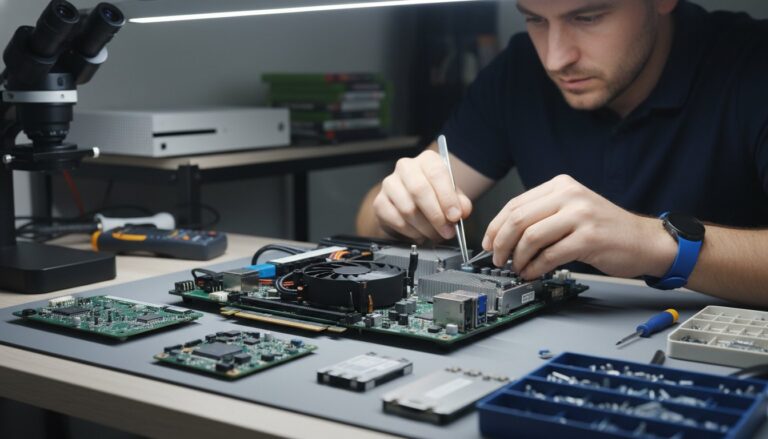
A little TLC goes a long way. Keep your console looking and playing its best with basic cleaning: use a soft, dry cloth for the shell and a cotton bud with a tiny amount of isopropyl alcohol to gently clean game contacts. For batteries, modern lithium-ion cells are happiest between 20-80% charge, while some older Ni-MH batteries benefit from a full discharge occasionally. If you encounter issues beyond a simple clean-like a fading screen, sticky buttons, or a faulty power jack-it’s time to call in the experts. For professional repairs and mods to truly get the best experience from your console, we’re always here to help.
Your Handheld Gaming Journey Starts Here
From the iconic bleeps of the Game Boy to the stunning screens of modern emulation devices, the world of portable gaming is richer and more accessible than ever. We’ve explored the golden eras, weighed the authentic charm of original hardware against the versatility of new tech, and highlighted the best devices to kickstart your collection. The most important takeaway is that there’s no wrong choice-only the perfect handheld game console for you.
Ready to take the next step? Here at MyRetroFix, we’re more than just a shop; we’re passionate experts and fellow hobbyists dedicated to the love of everything retro. As specialists in imported and rare consoles, and with professional UK-based repair and modification services, we’re here to help you build, restore, and perfect your setup. Find your perfect handheld and get your fix of everything retro!
Whatever path you choose, an incredible library of gaming history is waiting to be rediscovered. Welcome to the adventure!
Frequently Asked Questions
What is the best retro handheld game console for a beginner?
For anyone just starting their retro journey, we wholeheartedly recommend the Game Boy Advance SP. It’s the perfect entry point! It has a fantastic built-in backlit screen, a massive library of iconic games, and it’s fully backwards-compatible with original Game Boy and Game Boy Color cartridges. This robust and beloved handheld game console gives you access to three generations of incredible gaming history in one pocket-sized package. It’s a brilliant way to get your fix of the classics.
Can you play modern games like Fortnite on a retro handheld console?
No, you absolutely can’t. Original retro consoles like the Sega Game Gear or Nintendo DS were built with specific hardware designed only for the games of their era. They lack the immense processing power, internet connectivity, and modern operating systems required to run demanding titles like Fortnite or Call of Duty. For those, you’ll need a modern marvel like a Nintendo Switch or Steam Deck. Retro consoles are all about cherishing the classics as they were meant to be played!
Is it legal to download and play game ROMs on an emulation handheld?
This is a complex area under UK copyright law. While using an emulator itself isn’t illegal, downloading a ROM for a game you do not physically own is generally considered copyright infringement. To stay on the right side of the law and support the industry we all love, the best practice is to only use ROMs you have created from a game cartridge or disc that you legally own. We always encourage collecting and playing the original, physical copies of games.
How much should I expect to pay for a classic Game Boy in good condition?
In the UK, the price for a classic DMG-01 Game Boy depends heavily on its condition. For a loose, unboxed console in good, working order, you should expect to pay between £40 and £60. However, if you’re after a pristine, boxed model complete with its original manuals, the price can easily climb to £150 or more, especially for serious collectors. Always check for screen condition and any corrosion on the battery terminals before buying!
What’s the difference between a PAL and NTSC retro game?
PAL and NTSC were the television broadcast standards for different parts of the world. PAL was used here in the UK and across Europe, while NTSC was for North America and Japan. In retro gaming, this means PAL games often run slightly slower (at a 50Hz refresh rate) than their NTSC counterparts (60Hz), and sometimes have black borders on the screen. For the smoothest and fastest gameplay experience, many UK collectors specifically seek out the NTSC versions of their favourite games.
Are the games on modern ‘500-in-1’ retro handhelds any good?
Honestly, it’s a real mixed bag. These devices are often packed with hundreds of titles, but the quality is very inconsistent. You might find a few recognisable classics, but they are often buried among poorly translated games, numerous duplicates, and buggy homebrew creations. The emulation quality on such a cheap handheld game console can also be subpar. For an authentic and reliable experience, nothing beats playing on original hardware or a quality emulation device.