Get your fix of everything retro — specialists in imported & rare retroImported & Rare Retro

Shop By
Sega Dreamcast: The Ultimate Guide to a Gaming Legend
Thinking of finally diving into the world of Sega's legendary final console, but worried about unreliable disc drives or how you'll get that classic...

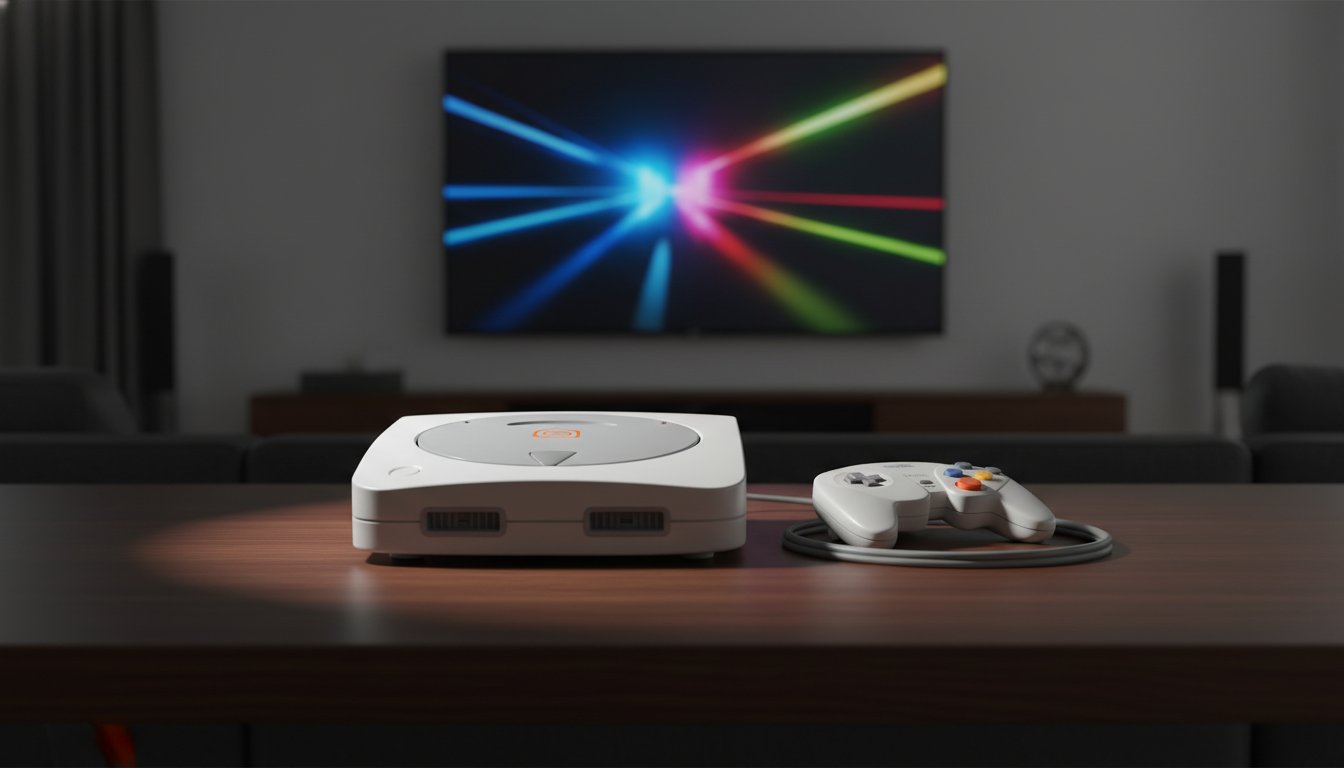
Thinking of finally diving into the world of Sega’s legendary final console, but worried about unreliable disc drives or how you’ll get that classic signal to look sharp on your 4K TV? You’re not alone. For many retro gaming fans in the UK, the thought of buying a 20-year-old machine can feel like a gamble. But the magic of that iconic swirl and the incredible library of games it represents is too good to miss. We believe the Sega Dreamcast deserves to be played, and we’re here to show you how to get the best experience possible.
Consider this your ultimate guide to getting your fix of a true gaming icon. We’ll journey through the Dreamcast’s trailblazing history, reveal the absolute must-play games you need for your collection, and break down the essential modern mods-from optical drive replacements to video output upgrades. By the time you’re done, you’ll not only know how to buy a reliable console but also understand why this cherished machine’s legacy burns brighter than ever.
Key Takeaways
- Discover why the Dreamcast was a console truly ahead of its time, packing revolutionary features that defined the future of gaming.
- Build your instant classic games library with our curated list of 10 must-play titles that are still incredible fun today.
- Arm yourself with a collector’s checklist to confidently buy a second-hand Dreamcast in the UK, avoiding common faults and costly mistakes.
- Unlock your console’s true potential with essential modern mods that deliver a stunning picture on today’s TVs and improve reliability.
A Console Ahead of Its Time: The Dreamcast’s Brilliant, Brief Legacy
In the late 90s, Sega was a company fighting for its life. After the commercial missteps and damaged reputation of the Saturn, they needed a knockout punch to reclaim their place in the console wars. Their answer was the Dreamcast, a sleek white box packed with forward-thinking technology that landed in the UK on October 14, 1999. It was a console brimming with arcade-perfect ports, stunning graphics, and a sense of pure, unadulterated fun. The initial launch was a massive success, breaking sales records and giving Sega the comeback story they desperately needed.
The Birth of Online Console Gaming
Long before Xbox Live became the standard, the Dreamcast pioneered online console gaming. Every unit shipped with a built-in 56k modem, a truly revolutionary move that eliminated the need for expensive add-ons. This wasn’t just a gimmick; it was a core part of the experience. Gamers could battle friends across the country in the addictive puzzle mayhem of ChuChu Rocket! or team up for epic quests in the groundbreaking MMORPG, Phantasy Star Online. It laid the foundation for the connected gaming world we take for granted today.
Innovation in Your Hands: The VMU
Sega’s creativity wasn’t confined to the console itself. The iconic Visual Memory Unit (VMU) was a memory card with its own LCD screen, D-pad, and speaker. Slotted into the controller, it provided private information like play calls in a sports game. Removed, it became a tiny handheld console for playing mini-games, most famously for raising a virtual pet in Sonic Adventure’s Chao Garden. It was quirky, its batteries drained quickly, but it was an unforgettable symbol of Sega’s ambitious, ‘blue sky’ thinking.
Why Did the Dreamcast Fail Commercially?
Despite its brilliance, the Dreamcast’s flame burned out far too quickly. The full Sega Dreamcast history reveals a perfect storm of challenges that ultimately sealed its fate. The shadow of the Saturn’s failure left many gamers and, crucially, developers wary of investing in another Sega platform. More importantly, the immense hype for the upcoming PlayStation 2-marketed not just as a next-gen console but as an affordable DVD player-was an unstoppable cultural force. This, compounded by a lack of support from key third-party publishers like EA, meant Sega simply couldn’t sustain momentum against Sony’s marketing might, and production ceased in early 2001.
The Games That Defined a Generation: 10 Must-Play Dreamcast Titles
So, you’ve got your hands on Sega’s white box of magic. Now what? A console is nothing without its games, and the Dreamcast library is a treasure trove of creativity and pure, unadulterated fun. The sheer variety of unique experiences is a huge part of the Legacy of the Sega Dreamcast, offering gameplay that still feels fresh decades later. This list is your essential starter pack-ten iconic titles that prove why this console is so cherished by retro gaming fans.
Arcade-Perfect Ports and Sega Classics
Sega brought the arcade home like never before, delivering vibrant, lightning-fast experiences that defined the console’s early days.
- Crazy Taxi: Pure arcade bliss. Ferociously fast, ridiculously fun, and powered by an unforgettable punk rock soundtrack from The Offspring and Bad Religion. ARE YOU READY?!
- Soulcalibur: More than just an arcade port, this was a system-seller. Widely seen as one of the greatest fighting games ever made, with fluid 8-way run controls and stunning graphics that still impress today.
- Jet Set Radio: A cel-shaded masterpiece of style and sound. Skate the streets of Tokyo-to, tag graffiti, and groove to one of gaming’s most iconic soundtracks. A true work of art.
- Virtua Tennis: Deceptively simple, impossibly addictive. The pick-up-and-play controls hide a game of incredible depth, making it a multiplayer legend.
Epic Adventures and Unforgettable Stories
The console wasn’t just about quick-fire arcade action. It was also home to some of the most ambitious and memorable narrative-driven games of its generation.
- Shenmue I & II: A landmark in game design. Ryo Hazuki’s quest for vengeance created a living, breathing world that was utterly groundbreaking for its time.
- Skies of Arcadia: A grand, optimistic JRPG adventure. Explore a world of floating islands, command your own airship, and battle sky pirates in a story filled with heart.
- Sonic Adventure 1 & 2: The Blue Blur’s finest 3D outings. These games captured the speed and attitude of the Mega Drive classics in a whole new dimension, defining the Dreamcast era for many.
Unique and Quirky Exclusives
Sega was never afraid to be different, and the Dreamcast library is packed with wonderfully weird titles you couldn’t find anywhere else.
- Seaman: The definition of ‘quirky’. Raise a bizarre fish-man creature using the microphone peripheral to talk to it. Unforgettable, strange, and brilliant.
- Rez: A hypnotic sensory experience. This rhythm-based rail shooter syncs gameplay, visuals, and sound into a transcendent journey.
- Power Stone 2: Forget complex combos; this is about pure, chaotic fun. A four-player arena brawler where you use giant hammers, flamethrowers, and screen-filling special moves.
Buying a Dreamcast in 2024: Your Collector’s Checklist
Ready to add Sega’s final masterpiece to your collection? Fantastic! Getting your hands on a Dreamcast is a brilliant move, but it pays to be prepared. These iconic consoles are now over two decades old, so knowing what to look for will save you from disappointment and help you find a real gem. Here’s our expert checklist to guide your search.
Hardware Inspection: What to Look For
Before you part with your cash, give any potential console a thorough once-over. These are the most common trouble spots to be aware of:
- The Case: The first thing you’ll notice is potential yellowing of the white plastic. This is a very common result of age and UV exposure and is purely cosmetic, but it does affect collector value.
- The GD-ROM Drive: This is critical. If possible, ask to see it load a game. A healthy drive should read discs relatively quickly without excessive grinding, whirring, or clicking noises. This is the console’s most common mechanical failure point.
- Controller Ports: A simple but crucial check. Plug a controller into all four ports to ensure they are all responsive and hold the plug securely.
- The Rebooting Issue: Does the console randomly restart? This is a well-known fault, often caused by the metal pins connecting the internal power supply to the motherboard becoming loose. It’s often a simple fix for those comfortable opening the console, but it’s a key fault to identify.
PAL, NTSC-U, or NTSC-J: Which Model is Right for You?
The Dreamcast came in three main regional variants, easily identified by the colour of the swirl on the lid. UK/European (PAL) models have a blue swirl and output at 50Hz. US (NTSC-U) and Japanese (NTSC-J) consoles have red and orange swirls respectively, running games at a smoother 60Hz. While most games are region-locked, this is easily bypassed with a boot disc, so don’t let region stop you from grabbing a great deal on a fantastic console.
Controllers and VMUs: Securing the Essentials
Your controller is your connection to the game, so we always recommend sticking with official Sega pads for the best build quality and feel. When buying a VMU (Visual Memory Unit), check that the tiny screen still works and inspect the battery contacts for any green corrosive residue. They require a CR2032 battery to power the screen and sound functions when removed from the controller.
In the UK market, expect to pay around £50 – £70 for a loose but fully working console. For a clean, boxed example with all the leads and a controller, you’re looking at anywhere from £90 to over £150. Finding a reliable unit is the key to reliving those glory days without the headache.
Ready to start your collection with confidence? Shop our range of tested Dreamcast consoles! We check every unit so you can get straight to the gaming.
Modernising a Legend: The Essential Dreamcast Mods for Today’s TVs
The Dreamcast was a marvel of its time, but two decades on, some of its components are showing their age. Connecting it to a 4K TV can be a challenge, and its mechanical disc drive is a ticking clock. But what if you could solve all these issues? That’s where the vibrant modding community comes in. These essential upgrades don’t just preserve Sega’s final console; they unlock its true potential for the modern era, ensuring it remains a joy to play for years to come.
Replacing the Disc Drive: GDEMU & MODE
At the heart of many modernised setups is an Optical Drive Emulator (ODE). This clever device replaces the original GD-ROM drive, which is prone to laser failure. The most popular option, the GDEMU, allows you to load your entire game library from a single SD card. This means no more disc swapping, lightning-fast load times, and the peace of mind that your console’s most fragile mechanical part is gone for good.
Crystal Clear Video: DCHDMI & VGA Boxes
Getting a sharp, clean picture on a modern television is the biggest hurdle for retro gamers. While standard composite cables produce a blurry mess, the Dreamcast has incredible video potential. For the absolute best picture quality, the DCHDMI mod provides a native, pixel-perfect digital signal directly to your TV’s HDMI port. A simpler, yet still fantastic, alternative is a quality VGA box, which outputs a crisp 480p signal that looks stunning on most displays.
Quality of Life Upgrades
Beyond the major upgrades, several smaller mods can perfect your gaming experience. These quality-of-life improvements address the final few quirks of the original hardware, resulting in a seamless and silent machine.
- The Noctua Fan Mod: Swaps the jet-engine-like original fan for a whisper-quiet modern equivalent, so the only thing you hear is the game’s soundtrack.
- PicoPSU / DreamPSU: A modern power supply that runs cooler and more efficiently, reducing internal heat and stress on the console’s classic components.
- Rechargeable Battery Mod: Replaces the soldered-in clock battery with a convenient holder, so you never have to reset the time and date again.
Combining these modifications transforms the console into the ultimate retro machine: silent, reliable, and with a picture quality its designers could only have dreamed of. Want the ultimate Dreamcast experience without the hassle of soldering? Explore our professional modding services!
Keep the Dream Alive: The Enduring Legacy of the Dreamcast
More than two decades on, the Sega Dreamcast’s legacy isn’t just one of what could have been, but of what it gloriously achieved: a console truly ahead of its time. From pioneering online multiplayer to birthing unforgettable classics like Shenmue and Jet Set Radio, its impact is undeniable. As we’ve explored, collecting and upgrading this legendary dreamcast for modern TVs isn’t a forgotten art; it’s a thriving passion that keeps the magic alive for a new generation.
Ready to start your own Dreamcast journey or upgrade an existing setup? At RetroFix, we live and breathe this stuff. As passionate experts and specialists in professional console modifications, we’re dedicated to helping you get the best experience. We offer a huge range of tested, authentic retro consoles and games, all curated by a team that loves this community as much as you do.
Get your fix of everything Dreamcast! Shop our games, consoles, and mods now.
The swirl is still turning, and the games are waiting. Happy gaming!
Frequently Asked Questions
Is the Sega Dreamcast region-locked?
Yes, the Dreamcast is region-locked. Games are typically coded for one of three regions: NTSC-U (North America), NTSC-J (Japan), or PAL (Europe/UK). A standard PAL console won’t play an imported Japanese game without help. However, the region-locking is famously easy to bypass. Many enthusiasts use a boot disc, such as Code Breaker or DC-X, to play games from any region. Alternatively, a permanent hardware modification can make your console truly region-free.
How do you save games on a Dreamcast?
Game progress on the Dreamcast is saved to a Visual Memory Unit, or VMU. This is a small memory card that plugs directly into the top slot of the controller. A standard VMU has 128KB of memory, which is divided into 200 “blocks” for storing save files. Some games require a significant number of blocks, so if you plan on playing many different titles, it’s a great idea to have a few spare VMUs on hand to avoid running out of space.
What is the VMU and do I need one?
The VMU (Visual Memory Unit) is the Dreamcast’s iconic memory card, but it’s so much more. It features a small LCD screen, a D-pad, and buttons, allowing it to function as a second screen for in-game information or even a portable mini-game device. You absolutely need a VMU to save your game progress. Its unique features are showcased in classics like Sonic Adventure, where you could raise a virtual Chao pet on the go.
Are Dreamcast consoles reliable? What are the common faults?
The Dreamcast is a generally robust and well-built console, but like any retro hardware, it has a few common issues. The most frequent fault is a failing laser in the GD-ROM drive, which can lead to games not loading. Another common problem is the console’s internal clock battery dying, which results in you having to set the date and time every time you power it on. Both of these issues are well-documented and repairable by experienced technicians.
Can a Dreamcast play burned games or backups?
Famously, yes. A standard, unmodified Dreamcast can play games that have been burned onto CD-R discs. This was possible because of Sega’s use of the proprietary GD-ROM format and an oversight in its copy-protection systems. For the best results, it’s recommended to use high-quality CD-Rs and burn your backups at the slowest possible speed. This capability made the console incredibly popular within the homebrew and emulation scenes.
What’s the best way to connect a Dreamcast to a modern 4K TV?
For the best possible picture quality on a 4K TV, you’ll want to use the console’s native VGA output. The sharpest signal is achieved using a Dreamcast VGA box or a dedicated VGA cable, which you can then connect to an HDMI upscaler like a RetroTINK or OSSC. This provides a crisp 480p image. Simpler plug-and-play HDMI cables are also now widely available, offering a fantastic, hassle-free upgrade over the blurry composite cables that came with the console.
How many controllers can you connect to a Dreamcast?
One of the Dreamcast’s best features for social gaming was its four built-in controller ports, located right on the front of the console. This allowed for four-player local multiplayer action without the need for any extra multitap accessories. It was perfect for gathering friends around the TV for chaotic sessions on iconic titles like Power Stone 2, ChuChu Rocket!, and Virtua Tennis, making it a truly brilliant party machine.