Get your fix of everything retro — specialists in imported & rare retroImported & Rare Retro

Shop By
Relive Super Mario 64: A Deep Dive Into a Gaming Revolution
Remember the first time you launched yourself from that cannon? The sheer freedom of that first triple jump in the castle grounds? For many of us,...

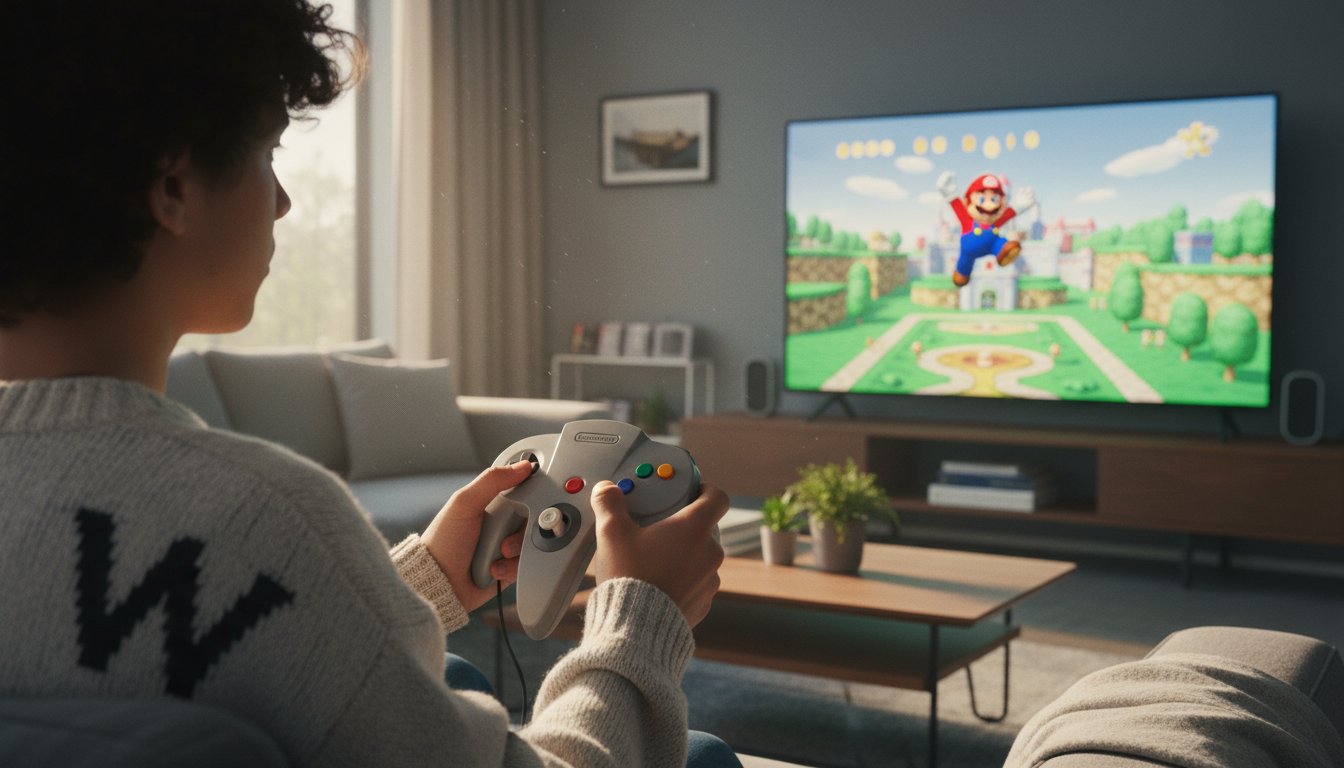
Remember the first time you launched yourself from that cannon? The sheer freedom of that first triple jump in the castle grounds? For many of us, the desire to relive the magic of mario for 64 is a powerful one, but it often comes with a hint of worry. Has it aged poorly? Are those revolutionary 3D controls now just clunky and frustrating? And the biggest question of all: in a market flooded with fakes and faulty cartridges, how do you find a genuine copy that actually works?
For the love of everything retro, we’re here to put those fears to rest. In this deep dive, we’ll not only explore why Super Mario 64 was a seismic shift that changed gaming forever, but we’ll also revisit its most iconic worlds and secrets. Most importantly, we’ll give you the expert advice you need to confidently buy an authentic N64 cartridge today, ensuring you get your proper retro fix. It’s time to recapture that joy, jump back through the painting, and maybe even share a piece of gaming history with a new generation.
A Leap of Faith: The World Before and After Super Mario 64
Cast your mind back to the mid-90s. The gaming landscape was a vibrant, but largely flat, 2D world. Pixel-perfect platformers and side-scrolling classics were king. While some developers were dipping their toes into the third dimension, the results were often clunky, restrictive, and felt more like tech demos than fully realised worlds. The industry was holding its breath, waiting for a title that could truly define what 3D gaming could be.
Nintendo didn’t just meet that expectation; they shattered it. With the launch of the Nintendo 64, they released a game that wasn’t just a system-seller, but a genre-definer. The story was classic Nintendo: Mario receives a letter from Princess Peach inviting him for cake, only to find Bowser has seized the castle and its 120 Power Stars. But the way this story unfolded was anything but traditional. That first moment, running around the lush grounds of Peach’s Castle, was pure magic. There were no invisible walls, no fixed paths. You could run, jump, and explore with a freedom that was simply unheard of.
The Jump to the Third Dimension
Super Mario 64 didn’t just use 3D; it wrote the rulebook for it. The N64’s analogue stick gave players a revolutionary degree of control, allowing Mario to tiptoe, walk, or run with precision. While other titles were still figuring out basic movement, Nintendo had perfected the art of translating Mario’s iconic jumps into a vibrant 3D space. This incredible feat of design is well-documented, as detailed on the Super Mario 64 Wikipedia page, showcasing the challenges they overcame.
More Than a Game, A Playground
Peach’s Castle was the heart of this new design philosophy. It was more than a hub world; it was a character in itself, filled with secrets to uncover. Finding hidden slides, chasing down MIPS the rabbit, or discovering secret star paintings wasn’t a chore, but a joy. This design encouraged pure exploration, making the experience of playing mario for 64 feel less like a linear checklist and more like a grand, personal adventure in a digital playground.
Revolutionary Gameplay: How Mario 64 Changed Everything
It’s impossible to overstate just how monumental the leap to 3D was. Before 1996, platformers were defined by side-scrolling precision. Then came Super Mario 64, a title that didn’t just add a dimension-it rewrote the entire rulebook. The game’s design philosophy, from control to level structure, created a blueprint that countless titles would follow for decades. This wasn’t just a new Mario game; it was the birth of a new era.
This newfound freedom was complemented by an acrobatic moveset that is still iconic today. The joyous triple jump, the strategic wall kick to reach hidden ledges, and the gravity-defying long jump gave Mario a versatility that made traversing Princess Peach’s castle and its many worlds an absolute delight. The entire experience of playing mario for 64 was about mastering these incredible new abilities.
Mastering the Controller
The bizarre, three-pronged Nintendo 64 controller felt like it was built specifically for this game. At its heart was the revolutionary analog stick. For the first time, players had complete 360-degree control over Mario’s movement. You could make him tiptoe past a sleeping Piranha Plant, break into a gentle jog, or launch into a full-pelt sprint-all with a subtle push of your thumb. This fluid control, combined with the C buttons for a (mostly) cooperative camera, gave players a connection to the character that was simply unheard of at the time.
The Birth of the Collect-a-Thon
Super Mario 64 threw out the linear “get to the flagpole” design of its predecessors. Instead, it introduced us to sprawling, open-ended worlds filled with 120 Power Stars to collect. Each level was a sandbox, and every star presented a unique mission-from winning a race against Koopa the Quick to piecing together eight red coins. This structure encouraged exploration and replayability in a way that changed gaming forever, directly inspiring a golden age of “collect-a-thon” platformers like Banjo-Kazooie and Spyro the Dragon.
Iconic Power-Ups
The classic Super Mushroom was gone, replaced by three magical caps that transformed gameplay in spectacular ways. These power-ups weren’t just simple buffs; they were keys to unlocking new areas and solving puzzles.
- The Wing Cap: An absolute classic. Grabbing this iconic red-winged cap allowed Mario to soar through the skies, giving players a breathtaking new perspective on the game’s vibrant worlds.
- The Metal Cap: Turning our hero into solid chrome, this power-up made Mario invincible, heavy enough to sink and walk along the bottom of lakes, and immune to noxious gases.
- The Vanish Cap: This spectral blue cap allowed Mario to become intangible, letting him walk right through certain walls, fences, and even some enemies to uncover hidden secrets.
A Tour of the Mushroom Kingdom: The Most Memorable Worlds
Jumping into a painting in Peach’s Castle for the first time was a defining moment for a generation of gamers. Super Mario 64 didn’t just have levels; it had living, breathing worlds, each a sandbox of secrets and cherished memories. These iconic courses are the heart and soul of the game, offering a variety and creative spark that still feels revolutionary today. From your first steps to the final showdown, this was a journey unlike any other.
Starting Worlds: Learning the Ropes
The opening courses were a masterclass in teaching players the new dimension of 3D platforming without a single tutorial box. Each one introduced core concepts in a fun, intuitive way:
- Bob-omb Battlefield: Your first jump into a painting, this open-world playground taught you everything about movement, exploration, and facing your first boss, the mighty King Bob-omb.
- Whomp’s Fortress: A brilliant lesson in vertical level design, forcing you to think upwards and strategically climb to topple the Whomp King from his perch.
- Cool, Cool Mountain: Introduced unique interactions, from the unforgettable secret slide race to reuniting a mother penguin with her lost chick.
Mid-Game Marvels and Challenges
As you collected more Stars, the game’s creativity truly exploded. Who could forget the eerie calm of Jolly Roger Bay while exploring a sunken galleon, or the constant, heart-pounding threat of Lethal Lava Land, where every jump was a risk? Shifting Sand Land presented a vast desert with a mysterious pyramid at its heart, filled with secrets and dangers. The level design in mario for 64 was a constant source of wonder, always promising a new adventure behind the next canvas.
The Final Frontier: End-Game Courses
The later stages pushed your skills to the absolute limit. Tick Tock Clock was a stroke of genius, a world where the speed of its mechanisms depended on the minute hand when you entered. And then there was Rainbow Ride, a beautiful but brutal final test of pure platforming prowess over a bottomless void. These challenges culminated in the three iconic Bowser levels, each an epic showdown in a unique, trap-filled arena that tested every move in your arsenal. They were the perfect, climactic end to an unforgettable journey.
Ready to relive the magic? Get your fix and find classic N64 games and consoles right here at MyRetroFix.
A Collector’s Guide: Buying Super Mario 64 Today
While modern consoles and compilations offer convenient ways to play, nothing compares to the tactile magic of the original. Holding that iconic grey cartridge, feeling the satisfying thunk as it slots into the console-this is the most authentic way to experience a piece of gaming history. If you’re looking to add the definitive mario for 64 experience to your collection, here’s what you need to know.
PAL vs. NTSC: Which Version is for You?
For UK collectors, the most straightforward choice is the PAL version, designed for European consoles. However, gaming purists often seek out the NTSC (US or Japanese) versions. These run at 60Hz, making the gameplay slightly faster and smoother than the 50Hz PAL release, closer to the developers’ original vision. Just remember that NTSC cartridges won’t work on a standard, unmodified UK Nintendo 64 due to region-locking.
How to Spot a Fake Cartridge
The retro market is unfortunately filled with counterfeit reproductions that can fool the unwary. When inspecting a cartridge, look for these tell-tale signs of a fake:
- Label Quality: Blurry images, washed-out colours, or incorrect fonts are major red flags. An original label is sharp and vibrant.
- Plastic Mould: Check the Nintendo logo on the back. On a genuine cart, the dot on the “i” is square, not round. The plastic should feel solid, not cheap or flimsy.
- Back Sticker: Look for a stamped number imprinted on the rear warning label. Fakes often miss this small but crucial detail.
The surest way to avoid disappointment is to buy from a reputable source. Shop our guaranteed authentic N64 games and get the genuine article every time.
What’s a Fair Price?
The value of a Super Mario 64 cartridge depends heavily on its condition and completeness. A loose, good-condition cartridge typically sells for around £30 – £45 in the UK market. If you’re after a complete-in-box (CIB) copy with the manual, expect to invest significantly more, often upwards of £100. Be aware of the ‘Player’s Choice’ versions; these re-releases with silver-and-red banners are often less valuable to collectors than the original black-box print run. Think of it not just as a purchase, but as an investment in a cherished and iconic piece of gaming culture.
Your Adventure in the Mushroom Kingdom Awaits
More than just a cherished memory, Super Mario 64 was a seismic shift in entertainment-a leap of faith into the third dimension that defined a generation of platformers. From its revolutionary analogue control to the sprawling, secret-filled worlds of Peach’s Castle, its impact is still felt today, cementing its status as a true icon of gaming history. For any enthusiast, owning a piece of that history is a must.
If you’re ready to relive that magic, it’s crucial to get it from a source you can trust. Finding an authentic copy of mario for 64 is the only way to truly experience this masterpiece. At MyRetroFix, we’re not just sellers; we are passionate experts and specialists in authentic retro games. We love these classics as much as you do, which is why every single cartridge is meticulously cleaned, tested, and guaranteed to work perfectly.
Get your fix! Grab your authentic copy of Super Mario 64 here.
Go on, jump back through that painting. Princess Peach is waiting.
Frequently Asked Questions
How many stars are there to collect in Super Mario 64?
There are a total of 120 Power Stars to collect in the original Super Mario 64. Each of the 15 main courses contains six stars, plus a secret seventh star for collecting 100 coins. The remaining stars are cleverly hidden throughout Princess Peach’s Castle in secret levels and awarded for defeating Bowser. Finding every single one is a true badge of honour for any retro gaming enthusiast and a monumental challenge!
Is Super Mario 64 still fun to play today?
Absolutely! Super Mario 64’s revolutionary 3D platforming and incredibly tight controls still feel fantastic. The freedom of movement, imaginative level design, and sheer joy of exploration are completely timeless. While the graphics are classic N64, the core gameplay is so iconic and well-designed that it remains one of the most beloved and replayable games ever made. It’s a pure dose of nostalgia that holds up brilliantly against modern titles.
Can you play as Luigi in the original Super Mario 64?
This is one of retro gaming’s most famous myths! Despite the persistent “L is Real 2401” rumours, you cannot play as Luigi in the original Nintendo 64 version of the game. He was planned during development but was ultimately cut due to hardware limitations. Luigi did, however, finally become a playable character in the fantastic 2004 Nintendo DS remake, *Super Mario 64 DS*, alongside Yoshi and Wario.
What’s the difference between Super Mario 64 on N64 and the DS version?
The DS version is more of a full remake than a simple port. It adds 30 extra Power Stars, bringing the total to 150, and features three new playable characters: Yoshi, Luigi, and Wario, each with unique abilities. The DS version also includes new mini-games and slightly updated graphics. However, many purists still prefer the original N64’s analogue stick for its precise control over the DS’s D-pad or touch screen.
What other ways can I play Super Mario 64 in 2025?
You’ve got some brilliant options to get your fix of this classic! The most accessible way is through the Nintendo Switch Online + Expansion Pack, which provides a great emulated version. You can also hunt down a physical copy of the *Super Mario 3D All-Stars* collection for the Switch. And of course, for that pure, unfiltered nostalgia, nothing beats playing an original mario for 64 cartridge on the authentic N64 hardware.
How long does it take to beat Super Mario 64?
Your playtime will depend on your goal. If you’re just looking to see the credits by collecting the required 70 stars and defeating the final Bowser, you can probably finish in about 10-15 hours. However, if you’re a true completionist aiming to hunt down all 120 stars, you’re looking at a much longer and more rewarding adventure, likely around 20-25 hours. It’s a game that truly rewards exploration!