Get your fix of everything retro — specialists in imported & rare retroImported & Rare Retro

Shop By
The Ultimate Guide to Buying Used Video Games in the UK
Is the thrill of the treasure hunt for classic games being soured by the fear of overpaying for a dud? We get it. You’re tired of scrolling through...

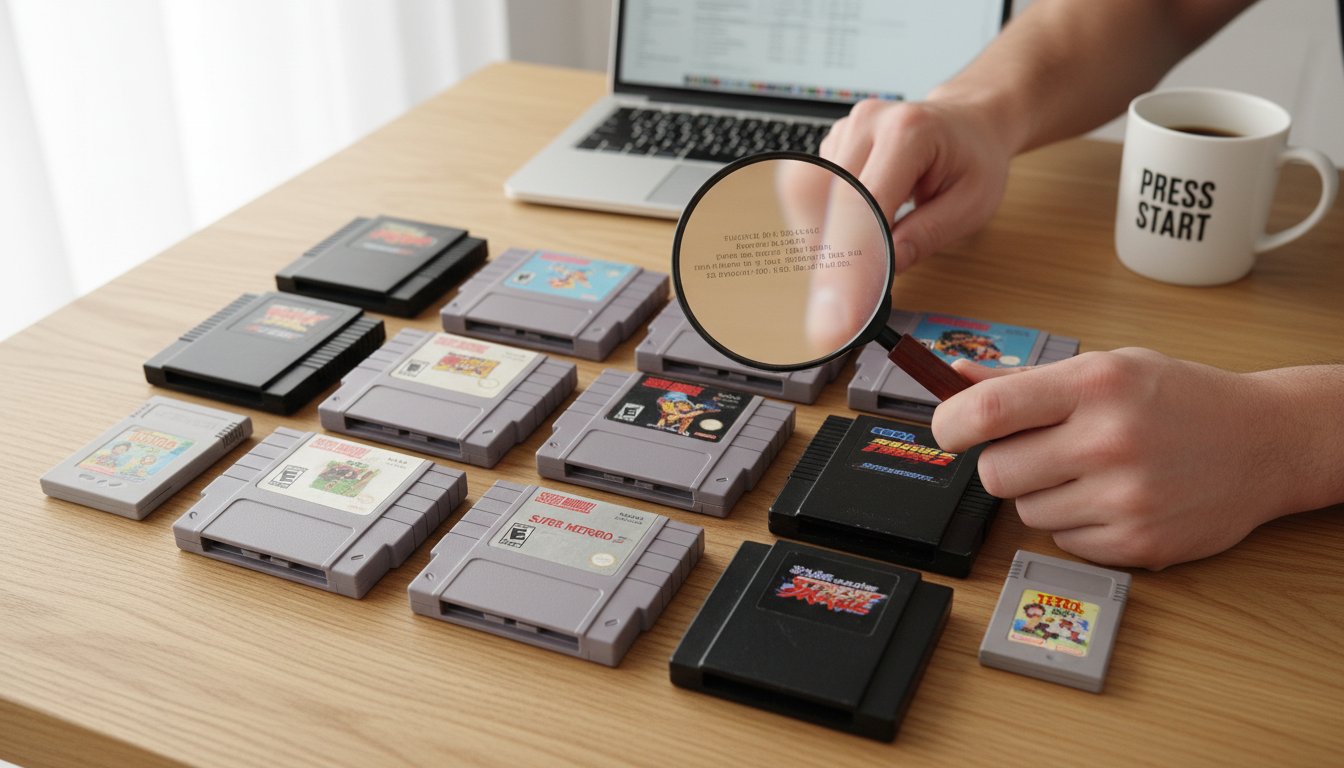
Is the thrill of the treasure hunt for classic games being soured by the fear of overpaying for a dud? We get it. You’re tired of scrolling through endless listings, trying to spot a counterfeit cartridge or figure out if a ‘mint’ label is telling the truth. The market for used video games UK collectors can feel like a minefield, turning a nostalgic passion into a source of stress. What does ‘CIB’ even mean, and how much should you really be paying for that loose copy of a childhood favourite you spotted at a car boot sale?
Well, it’s time to get your fix of retro, without the risk. This is your ultimate guide to navigating the exciting world of pre-owned gaming right here in the UK. We’ll uncover the best hunting grounds beyond CEX and eBay, teach you how to grade a game’s condition like a pro, and give you the expert knowledge to spot fakes and value your finds accurately. Get ready to confidently build the collection of your dreams, one cherished classic at a time.
Key Takeaways
- Learn the pros and cons of different sellers to find the best deals and rarest gems in the diverse market for used video games uk.
- Decode common grading terms like ‘CIB’ and ‘Mint’ to confidently assess a game’s true value and avoid overpaying.
- Get equipped with simple, effective checks to spot fake retro games, safeguarding your cherished console from potential damage.
- Understand the difference between PAL and NTSC regions to ensure any game you buy is compatible with your UK hardware.
Where to Buy Used Video Games in the UK: A Complete Rundown
The market for used video games UK collectors love is a vibrant and diverse landscape, stretching from bustling high streets to niche corners of the internet. Each source offers a unique experience, with its own pros and cons for price, rarity, and quality. Whether you’re hunting for a £1 bargain or a collector-grade holy grail, knowing where to look is the key. Let’s dive into the best places to build your classic collection and recapture that nostalgic joy.
The High Street & Physical Stores
Nothing beats the feeling of physically holding a game you’ve been searching for. These spots are your best bet for an in-person find.
- CEX: The most visible option, CEX offers incredible convenience and a 24-month warranty. The downside? Prices often reflect the high street premium, and the condition of boxes and manuals can be a lottery.
- Charity Shops & Car Boot Sales: This is where the real treasure hunting happens. The thrill of unearthing a rare PS1 classic from a bargain bin is unmatched. It’s a game of pure luck, but the potential for a legendary find keeps us all looking.
- Independent Retro Shops: The heart and soul of the community. Run by passionate experts, these stores offer curated collections, sound advice, and a chance to connect with fellow gamers. You’re not just buying a game; you’re supporting the scene.
Online Marketplaces & Specialist Retailers
When the high street comes up short, the digital world opens up a massive inventory for every kind of collector.
- eBay: The biggest marketplace with an unparalleled selection. However, you’ll need a sharp eye to spot reproductions and be prepared for inflated “collector” prices and intense bidding wars.
- Facebook Marketplace & Groups: Fantastic for finding local deals, avoiding postage, and engaging in trades. It’s wonderfully community-driven, but exercise caution as there’s little buyer protection.
- Specialist Online Stores: For a guaranteed authentic experience, specialist retailers are the best choice. Stores like RetroFix offer meticulously curated, cleaned, and tested games. It’s the perfect place to find rare imports, understand regional differences (a good PAL vs NTSC Explained guide is essential reading), and secure collector-grade items without the risk. Get your fix of guaranteed authentic games today!
Events and Community Swaps
Gaming is a social hobby, and buying games can be too! These events are a must for any serious enthusiast.
- Gaming Markets: Events like the London Gaming Market bring dozens of sellers under one roof. It’s a collector’s paradise, offering a fantastic opportunity to browse huge amounts of stock and haggle for a great deal.
- Conventions: Larger events like Play Expo are about more than just shopping. You can play classic arcade machines, meet creators, and find rare games from specialist vendors. The real value is in networking with other collectors and sharing your passion.
A Collector’s Guide to Game Condition: What ‘CIB’ and ‘Mint’ Really Mean
Diving into the world of retro gaming is a thrill, but a game’s condition can mean the difference between a cherished treasure and a costly mistake. Whether you’re a serious collector aiming to preserve a piece of history or a player just wanting to relive a classic, understanding the language of condition is key. It dramatically affects a game’s value, collectability, and ultimately, your enjoyment. Let’s decode the terms you’ll see when searching for used video games uk so you can buy with confidence.
The Main Categories of Condition
Sellers generally group games into three core categories. Knowing which one you’re after is the first step to finding the perfect addition to your collection.
- Loose: This is just the game cartridge or disc itself. It’s the most affordable way to get playing and perfect if you’re not concerned with box art or manuals.
- Boxed: You get the game and its original outer box. It’s a great middle-ground for display, but it might be missing the instruction manual or other inserts.
- Complete in Box (CIB): The collector’s standard. This means you get the game, its original box, and the instruction manual. Some collectors go even further, seeking registration cards and promotional inserts!
Understanding Quality Grades
Within those categories, sellers use grades to describe the physical quality. While subjective, these terms give you a solid idea of what to expect.
- Mint/Pristine: Looks like it just came off the shelf in the 90s. The box has sharp corners, the label is flawless, and the disc or cart has no visible marks. These are rare and command the highest prices.
- Good/Very Good: The most common grade for well-cared-for games. Expect minor shelf wear on the box, a clean label with maybe a tiny scuff, and a fully working game. A solid choice for most collectors.
- Acceptable/Player’s Copy: This game has seen some love. The box might be creased, the label could be faded or torn, but the game has been tested and is guaranteed to work. It’s all about the gameplay here!
What to Check Before You Buy
To avoid disappointment, become a savvy buyer. Always scrutinise the listing and don’t be afraid to ask questions. Here’s a quick checklist:
- Check Photos Carefully: Look for sun fading on the box spine, tears on cartridge labels, or cracks in the plastic shell. Zoom in!
- Confirm It’s Tested: Ask the seller if the game has been recently tested on original hardware. If a game is sold as working but arrives faulty, it helps to know your consumer rights as a UK buyer.
- Examine Discs: For disc-based games like PlayStation or Dreamcast, distinguish between light surface marks (often fine) and deep, feelable scratches which can cause skipping or loading errors.
Spotting a Fake: How to Avoid Counterfeit Retro Games
The incredible resurgence of retro gaming has a dark side: a market flooded with counterfeit cartridges. These fakes aren’t just a collector’s nightmare; they can perform poorly, fail to save your progress, and in some cases, even damage the sensitive pins inside your cherished classic console. A fake cartridge will never hold its value and buying them supports shady operations. If you’ve been caught out, you can even report counterfeit games to the authorities to help protect others.
Learning a few key checks can save you from a costly mistake. We’ll focus on the most commonly faked formats: Game Boy Advance (GBA), Nintendo DS, and SNES.
Key Warning Signs on Cartridges
Before you add a game to your basket, take a moment to play detective. Counterfeiters often cut corners, and the signs are usually there if you know what to look for:
- Label & Artwork: A genuine label has sharp, high-quality printing. Fakes often have blurry text, washed-out colours, pixelated logos, or are cut off-centre.
- Plastic Shell: Authentic cartridges use high-grade plastic. Fakes often feel cheap, lightweight, or brittle. The colour might also be slightly off-a grey that’s just a bit too dark or light is a common red flag.
- Circuit Board Stamp: On cartridges where the circuit board is visible (like GBA games), look for the “© Nintendo” text printed in white on the board itself. Fakes almost never have this official marking.
- Imprinted Number: Many original Nintendo cartridges (NES, SNES, N64, Game Boy) have a two-digit number lightly imprinted or stamped into the back label. This is a factory quality-control mark that fakes rarely bother to replicate.
Commonly Faked Games to Watch Out For
While any popular game can be faked, some are targeted far more than others. Be extra vigilant when you see these titles for sale:
- Pokémon Games: By a huge margin, Pokémon titles for the Game Boy, GBA, and DS are the most frequently counterfeited games on the planet. Be extremely cautious with any listing, especially if the price seems too good to be true.
- High-Value Handhelds: Cherished classics like The Legend of Zelda: The Minish Cap, Castlevania: Aria of Sorrow, and many Mario titles are also high-risk targets.
- Unusually Cheap Classics: A “brand new” sealed copy of a rare SNES or Mega Drive game for £25 is almost certainly a fake. These rare titles command high prices for a reason.
The Best Defence: Buy From a Trusted Source
The single best way to avoid the stress and disappointment of buying a fake is to purchase from a reputable specialist. When you’re looking for used video games uk, a trusted store does the hard work for you. We meticulously inspect, clean, and test every single game we stock to verify its authenticity.
This process eliminates the guesswork and risk, ensuring the game you receive is the real deal-a genuine piece of gaming history that will work perfectly and hold its value. That peace of mind is worth the small premium. Get your fix without the fear of fakes; shop our collection of verified authentic retro games.
PAL vs NTSC: What UK Collectors Need to Know About Regions
When you’re diving deep into the world of retro gaming, you’ll quickly discover a crucial detail that can make or break your experience: region locking. In the golden era of consoles, a game bought in the USA wouldn’t necessarily work on a console bought in the UK. Understanding this is essential for any collector browsing for used video games uk and beyond. Let’s break down the differences and show you how to build a truly global collection.
Understanding PAL (UK/EU)
The UK and the rest of Europe use the PAL (Phase Alternating Line) standard. For classic gamers, this means two things. Firstly, PAL games run at a 50Hz refresh rate. On older consoles, this often resulted in games playing slightly slower than their US or Japanese counterparts, sometimes with black borders at the top and bottom of the screen. These are the standard games sold and played in the UK, and your unmodified console is designed to play them perfectly.
The Allure of NTSC (USA/Japan) Imports
So why bother with imports? NTSC (National Television System Committee) is the standard used in North America (NTSC-U) and Japan (NTSC-J). These games run at a 60Hz refresh rate, which is the full-speed, full-screen experience the developers originally intended. Importing NTSC games gives you access to this superior performance and opens up a treasure trove of titles that never received a PAL release, from iconic RPGs to quirky platformers. For many, the unique and often beautiful Japanese box art is another huge draw for collectors.
How to Play Imported Games on Your UK Console
Ready to get your fix of NTSC classics? You have a few fantastic options to make your UK console region-free:
- Converter Cartridges: Devices like the Action Replay or dedicated “freeloader” discs act as a pass-through, tricking your console into playing imported games. They are a great plug-and-play solution, though compatibility can sometimes be an issue.
- Hardware Modification: For the ultimate, seamless experience, a hardware modification is the best route. This involves professionally altering the console’s internal circuitry to bypass the region lock entirely, allowing it to play games from anywhere in the world flawlessly.
A professional modification ensures perfect compatibility and performance, future-proofing your cherished hardware. If you want the best possible experience from your classic console, we can help. Explore our console modification services and unlock your collection’s true potential.
Your Quest for Classic Games Starts Here
You’re now equipped with the expert knowledge to navigate the exciting world of retro collecting. Understanding game conditions, spotting counterfeits, and knowing your PAL from your NTSC are the ultimate power-ups for any enthusiast. Armed with this guide, you can confidently hunt for the very best used video games UK collectors dream of, ensuring every addition to your shelf is a certified classic.
Feeling inspired to start your search? At RetroFix, we share your passion. As specialists in rare and imported retro games, we take the guesswork out of building your collection. Every single game we sell is professionally tested and guaranteed authentic, so you can buy with complete peace of mind. We even offer professional console repair and modification services to help you get the best possible experience from your cherished hardware.
Ready to find your next treasure? Get your fix of everything retro! Browse our huge selection of games. Happy hunting!
Frequently Asked Questions
Is it cheaper to buy used video games online or in-store?
Generally, buying used video games online offers better prices and a far wider selection than most high-street stores. Online sellers have lower overheads, and marketplaces allow you to compare prices easily. While a trip to a physical shop like CEX or a local independent lets you inspect the condition firsthand, dedicated online specialists often provide more competitive pricing, especially for rarer retro titles. For common games, the price difference might only be a few pounds, but for collectors, online is usually the way to go.
How can I tell if a used retro game is valuable?
A retro game’s value is determined by three key factors: rarity, condition, and demand. A game with a low print run is naturally scarcer. Condition is crucial – a “Complete in Box” (CIB) copy with the manual and original case is worth significantly more than a loose cartridge. Finally, demand for iconic titles like Chrono Trigger or cult classics will always drive up the price. Check recent sold listings on auction sites to get a current market value for your cherished classics.
What is the difference between PAL and NTSC games and does it matter?
PAL and NTSC are regional television standards. PAL is the standard for the UK and Europe, while NTSC is for North America and Japan. On original retro consoles, it matters a great deal. PAL games run at 50Hz, slightly slower and with black borders compared to the 60Hz NTSC versions. If you’re playing on original UK hardware, you need PAL games. However, many modern or modified consoles can play games from any region, giving you access to the entire global library.
Are used video games from CEX reliable?
CEX is a reliable option for convenience and peace of mind, as all their used games come with a 24-month warranty, which is fantastic. They are a great place to pick up common titles for recent consoles. However, their grading of retro game conditions can sometimes be inconsistent, and prices for rare or collectible items are often higher than you’d find at a specialist online retro store. They are a trustworthy source, but serious collectors may prefer more specialised sellers for high-value items.
How do I clean and maintain my old game cartridges?
Keeping your cartridges clean is key to making them last. For the metal contacts, use a cotton bud lightly dipped in high-purity (99%) isopropyl alcohol and gently scrub away any grime. Be sure it’s completely dry before inserting it into your console! For the plastic casing, a simple wipe with a soft, slightly damp cloth is usually enough to remove dust and fingerprints. Proper cleaning can often bring a non-working classic back to life and is a vital part of the retro hobby.
What’s the best way to start a retro game collection on a budget?
The best approach is to start small and be patient. First, pick one console you truly love, like the Mega Drive or PlayStation 2, and focus your efforts there. To keep costs down, hunt for popular, common titles first, as they are usually priced under £10. When searching for used video games uk, don’t be afraid to buy ‘loose’ (cartridge or disc only) copies, as they are much cheaper than boxed ones. Car boot sales and charity shops can also be treasure troves for hidden gems.