Get your fix of everything retro — specialists in imported & rare retroImported & Rare Retro

Shop By
The Best Retro Console for Beginners: Your Guide to Authentic Gaming in 2026
Spending £50 on a generic "all-in-one" emulation box is often the fastest way to kill your interest in classic gaming before you've even finished the...

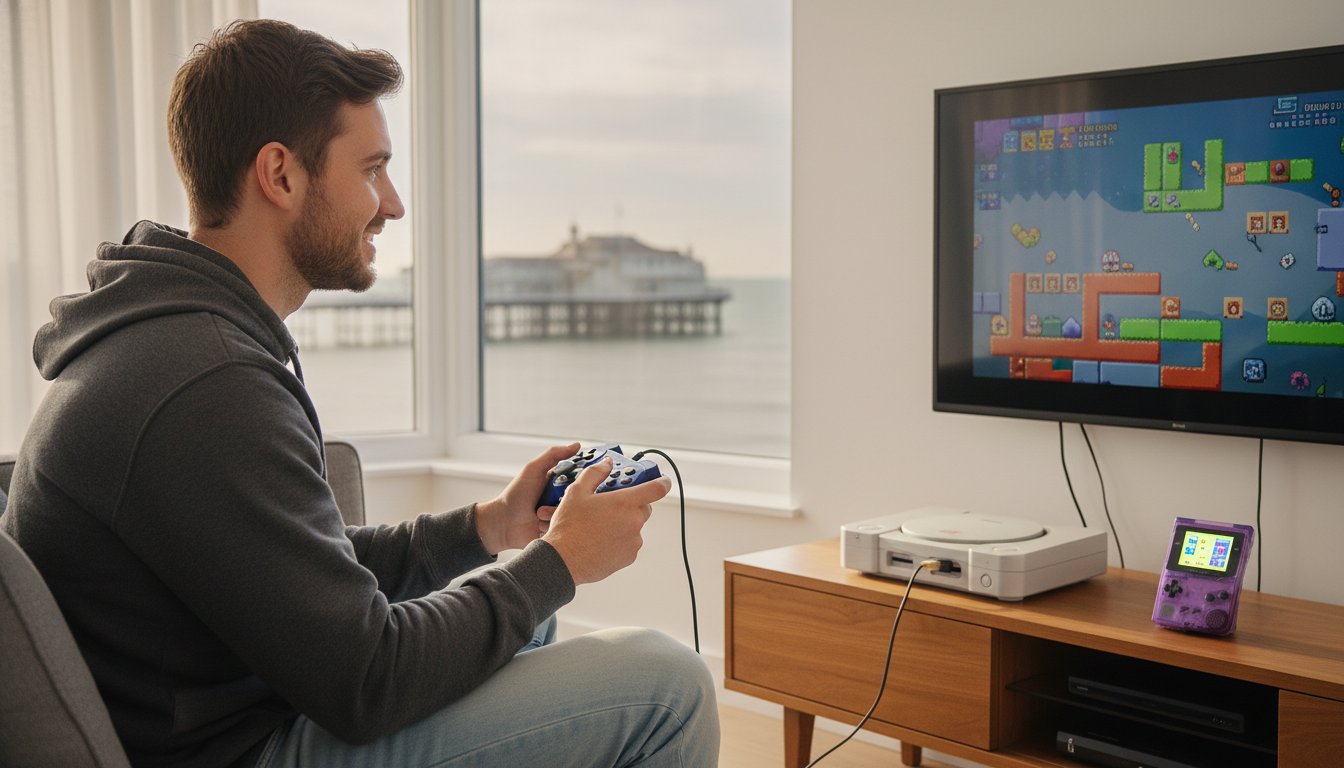
Spending £50 on a generic “all-in-one” emulation box is often the fastest way to kill your interest in classic gaming before you’ve even finished the first level of Super Mario. You want the authentic click of a cartridge and the zero-lag response of original hardware, but the fear of buying a “refurbished” console that arrives smelling of damp is a genuine worry for 85% of new collectors. It’s frustrating when your 2026 4K television makes a legendary 16-bit masterpiece look like a blurry, unplayable mess. We know you just want to get your fix of everything retro without the headache of regional lock-outs or failing capacitors.
Finding the best retro console for beginners doesn’t have to be a gamble on auction sites. This guide will help you bypass the “junk” and discover which machines offer the most reliable entry point into the hobby. We’ll show you why certain 1990s icons are still the gold standard for reliability and how to handle the confusion of PAL versus NTSC-J imports. By the time you’re done, you’ll have a clear path to building a collection that actually works every time you flip the power switch.
Key Takeaways
- Learn why plug-and-play simplicity and a massive library of iconic games are the essential ingredients for any successful starter setup.
- Discover why the Nintendo Game Boy and Sony PlayStation 2 are ranked as the best retro console for beginners due to their reliability and vast UK libraries.
- Understand the critical benefits of original hardware over cheap modern emulators, ensuring you get zero input lag and that authentic, nostalgic feel.
- Master the essential buyer’s checklist to avoid common pitfalls like screen rot or regional lockout issues between PAL and NTSC systems.
- Explore how professional refurbishments and IPS-screen modifications can take the gamble out of your first purchase for the ultimate gaming experience.
What Makes a Retro Console ‘Beginner-Friendly’?
Starting your journey into the world of classic gaming should feel like a celebration, not a technical hurdle. When you are hunting for the best retro console for beginners, the goal is to find a machine that delivers instant joy without requiring a degree in electrical engineering. For many of us at RetroFix, that first “click” of a cartridge represents a gateway to a lifelong obsession. A beginner-friendly system strips away the modern frustrations of 50GB day-one patches and mandatory internet connections, replacing them with immediate, tactile gameplay.
True ease of use comes from plug-and-play capability. You want a system where the hardware and software are inseparable. Consoles from the 8-bit and 16-bit eras, such as the Nintendo Entertainment System or the Sega Mega Drive, mastered this. You simply insert the game, flick a physical power switch, and you are at the title screen in under five seconds. This simplicity is a core reason why the history of video game consoles remains so relevant to new players today. These machines were designed for living rooms and bedrooms, not server racks.
Library depth and availability are equally vital for those just starting out. A beginner-friendly console needs a catalogue of iconic, recognisable titles that are still affordable. In the UK market, you can often pick up a functional Game Boy or a Master System for between £50 and £80. You shouldn’t have to pay “collector” premiums of £300 just to play the basics. Durability is the final pillar; hardware like the original Game Boy was famously built to survive a literal bomb blast. These machines are easy to maintain, often requiring nothing more than a quick clean of the cartridge pins with some isopropyl alcohol to get them running like it is 1989 again.
Why Your First Console Matters
Your initial experience dictates whether retro gaming becomes a cherished hobby or a dusty box in the attic. We see many newcomers suffer from “tech fatigue” because they started with complex arcade setups or unoptimised emulation boxes that require hours of menu diving. By 2026, the aesthetic of 240p resolution is widely recognised as a deliberate art style rather than a technical limitation. Setting realistic expectations is key. You aren’t looking for 4K textures; you are looking for the responsive, frame-perfect gameplay that defined the 1990s. Choosing the best retro console for beginners ensures that your first memory is one of victory, not troubleshooting.
The ‘Just Works’ Factor
Systems like the NES or the Game Boy became household names because they removed the friction between the player and the game. There is a specific, tactile joy in the mechanical “thunk” of a cartridge that a digital scrolling list simply cannot replicate. This physical connection to the media makes the experience feel permanent and tangible. It is about the smell of the plastic and the weight of the controller in your hand. The beginner sweet spot is the intersection of price, reliability, and fun. When you find that balance, you aren’t just playing a game; you are recapturing a piece of cultural history that still plays beautifully decades later.
The Top 3 Best Retro Consoles for Beginners
Choosing your first vintage system feels like stepping into a time machine. You want something reliable, affordable, and packed with games that still play brilliantly today. While hundreds of machines exist, three specific systems stand out as the best retro console for beginners because they offer the perfect balance of ease of use and pure nostalgic joy.
Game Boy Advance: The Handheld Hero
The Game Boy Advance (GBA) is arguably the ultimate starting point for any new collector. Since its 2001 launch, it has remained a favourite due to its incredible backward compatibility. You can play almost every game from the original 1989 Game Boy and the Game Boy Color on a single GBA handheld. This gives you access to three generations of Nintendo history in one pocket-sized device.
If you’re looking for the best experience, aim for the GBA SP model released in 2003. Its clamshell design protects the screen from scratches, and the built-in front-lit (or back-lit in later AGS-101 models) display means you don’t have to sit under a lamp to see the action. The library is filled with masterpieces designed for 15-minute bursts, making it ideal for modern life. You can explore our curated selection of handhelds to find a refurbished unit that feels brand new. Many of these titles, from Pokémon to Zelda, are featured in our guide to the Best Game Boy Games.
PlayStation 2: The Value King
The Sony PlayStation 2 (PS2) remains the best-selling console of all time, with over 155 million units moved globally. For a beginner in the UK, this is fantastic news. Because so many were sold, the hardware is incredibly easy to find. You can often pick up a working console for between £30 and £50 at local trade-in shops or online markets. It’s the best retro console for beginners who want a massive variety of genres without spending a fortune.
- Two Consoles in One: The PS2 plays almost the entire original PlayStation (PS1) library, giving you two generations of hits.
- Media Centre: It functions as a reliable DVD player, which was a revolution in 2000 and still adds utility to your setup today.
- Diverse Library: Whether you want the gritty realism of GTA: San Andreas or the family-friendly fun of Ratchet & Clank, the PS2 has it all.
The UK market is currently saturated with affordable PS2 titles, ranging from 50p sports games to £15 blockbuster adventures. For a deeper dive into why this system dominates the scene, check out our PS2 Pillar page.
Sega Mega Drive: 16-Bit Simplicity
If you want a system that “just works,” the Sega Mega Drive is your best bet. Released in the UK in 1990, this 16-bit powerhouse is famous for its robust build quality. Unlike modern consoles with complex operating systems and fragile disc drives, the Mega Drive uses sturdy cartridges that rarely fail. It’s the king of arcade-style action, offering fast-paced gameplay that’s easy to pick up and put down.
Nostalgia for Sonic the Hedgehog runs deep in the UK, and the Mega Drive delivers that “blast processing” speed perfectly. Setting it up is simple; most UK sets from the 90s used RGB Scart cables, which provide a crisp, vibrant image on older CRT televisions. It’s the top choice for fans of Street Fighter II or Streets of Rage. You can learn more about the different model variations in our Mega Drive Pillar.
Honourable Mention: The Nintendo 64
While the three above are the easiest to start with, the Nintendo 64 (N64) deserves a shout for those who crave 3D multiplayer. Released in the UK in 1997, it features four controller ports right on the front. It’s the definitive choice for groups of friends who want to play GoldenEye 007 or Mario Kart 64. Just be aware that N64 cartridges can be slightly more expensive for collectors than Mega Drive or PS2 equivalents.
Original Hardware vs. Emulation Handhelds
Choosing the best retro console for beginners usually starts with a fundamental fork in the road. Do you buy the original plastic box from 1991, or a modern handheld that mimics it? Authenticity isn’t just a buzzword; it’s a technical reality. Original consoles offer zero input lag because they process signals at the hardware level. A standard SNES sends a controller input to the screen in roughly 16.67 milliseconds. Most software emulators add 3 to 6 frames of lag, which makes twitchy platformers feel like you’re playing through treacle.
Reliability is another factor that surprises newcomers. A Nintendo Game Boy manufactured in 1989 is built with robust, through-hole components that can last half a century with basic maintenance. Most budget emulation handhelds use cheap lithium-polymer batteries that lose 20% of their capacity after just 300 charge cycles. If you want a machine that still works in 2040, the original hardware is almost always the safer bet.
From a financial perspective, original gear acts as a “store of value” rather than a sinking cost. Consider these UK market trends:
- A boxed PAL copy of The Legend of Zelda: A Link to the Past rose from £85 in 2019 to over £210 by early 2024.
- Original hardware like the Sega Saturn has seen a 40% price increase in the last 36 months.
- Modern emulation devices typically lose 50% of their resale value within 14 months of release.
There’s also the “Analysis Paralysis” trap. When you have 15,000 games on a single SD card, you’ll likely spend 45 minutes scrolling and only three minutes playing. Beginners often have a better experience by owning five physical games they actually intend to finish. Having skin in the game makes the victory over a final boss feel earned. It’s the difference between a cluttered hard drive and a cherished library.
The Soul of Retro Gaming
Collecting physical media changes your relationship with the hobby. There is a distinct tactile joy in the “thunk” of a Mega Drive cartridge or the click of a Game Boy power switch. For UK collectors, hunting for rare PAL titles creates a community bond. Trading at local retro fairs or finding a crisp, non-sun-faded box for your shelf turns gaming into a curated gallery of 90s history. It’s about preserving a piece of culture, not just running a file.
When Emulation Makes Sense
Emulation has its place, especially when space is at a premium in a small flat. It’s also the only way to play “holy grail” titles without taking out a second mortgage. A PAL copy of Panzer Dragoon Saga currently fetches over £650 on the secondary market. At MyRetroFix, we help you get the best of both worlds. We specialise in “freshening up” original gear with modern mods, like installing 1080p-compatible HDMI outputs or bright IPS screens. This keeps the soul of the best retro console for beginners intact while removing the frustrations of 30 year old display technology.
The Beginner’s Checklist: What to Check Before Buying
Buying your first vintage system is an adrenaline rush, but finding the best retro console for beginners means looking beyond the plastic shell. You’re often buying hardware that’s 30 years old; components inside have a shelf life. Internal health is the silent killer of classic hardware. Electrolytic capacitors, particularly in the Sega Game Gear or the original Xbox, were designed to last about 20 years. By 2024, many are leaking corrosive fluid onto motherboards. Always ask a seller if the console has been “re-capped” or if the “clock capacitor” has been removed to avoid a total hardware failure six months down the line.
Handheld collectors face different hurdles. Screen rot, which looks like dark ink bleeding behind the glass, is common in original Game Boy units and is usually unfixable for a novice. Check for dead pixels or “ghosting” on the display before handing over your cash. Power is another safety trap. Never use a cheap, £5 unregulated power brick from a random marketplace. These units often lack voltage protection and can spike, frying the delicate voltage regulator inside a Mega Drive or SNES instantly. Investing £15 in a modern, regulated power supply is the cheapest insurance policy you can buy.
The PAL vs NTSC Dilemma
British gamers in the 90s often got a raw deal. UK consoles used the PAL standard, which ran at 50Hz. This meant games like Sonic the Hedgehog ran 17.5% slower than the 60Hz NTSC versions found in Japan and the US. Those iconic black borders at the top and bottom of the screen were a result of this technical mismatch. If you want the intended experience, look for consoles modified with a 50/60Hz switch or consider importing an NTSC-J (Japanese) unit. Just remember that Japanese hardware requires a step-down transformer or a UK-specific 240v power lead to prevent a literal “spark” of disappointment. Many enthusiasts now opt for region-free mods to play rare imports without the speed penalty.
Connecting to Modern TVs
While the Nintendo 64 is often cited as the best retro console for beginners, its video output can be tricky on a 2026 4K television. Most modern screens have ditched the old red, white, and yellow composite ports entirely. If you plug a 240p console into a 4K TV using a basic £10 HDMI dongle, the result is often “muddy” with significant input lag of 50ms to 100ms. This makes fast-paced platformers nearly unplayable. To get a crisp, pixel-perfect image, you need a dedicated upscaler.
- OSSC (Open Source Scan Converter): Ideal for processing analogue signals into a sharp HDMI output without adding lag.
- Retrotink: The gold standard for plug-and-play simplicity, making 90s consoles look stunning on OLED screens.
- Rad2x Cables: A budget-friendly way to get a clean, linedoubled signal from specific consoles like the PlayStation 1.
Don’t settle for a blurry image that ruins the nostalgia. You can get your fix of everything retro including professionally refurbished consoles and high-quality video cables that bring your childhood memories back to life in high definition.
Getting Your Fix: How RetroFix Perfects the Experience
Picking up your first vintage handheld should feel like pure magic, not a technical chore. If you are searching for the best retro console for beginners, a modded Game Boy equipped with a modern IPS screen is the undisputed gold standard. Original hardware from 1989 relied on ambient light, meaning you spent half your time tilting the screen to find a reflection. Our IPS modifications provide vibrant colours, 178-degree viewing angles, and adjustable brightness levels that make these classics look better than they did thirty years ago.
Buying used gear from auction sites is often a gamble. You might save £10 upfront, but you risk receiving a unit with leaky batteries or sticky buttons. We take that uncertainty out of the equation. Every console we sell undergoes a rigorous refurbishment process to ensure it arrives in your hands ready for “out of the box” fun. We treat these machines like the cultural icons they are, restoring them so they can be enjoyed by a new generation of gamers in the UK and beyond.
Customisation is where the real joy begins. We don’t just fix consoles; we make them unique. You can choose from a vast array of high-quality shells, from nostalgic “atomic purple” transparent cases to sleek, modern matte finishes. Matching these with custom-coloured buttons allows you to own a piece of history that reflects your personal style. Being a UK-based shop means you also get expert support. If you have a question about which flash cart to use or how to care for your screen, we are just a message away.
Why a Refurbished Console is Better Than New
The term “full re-cap” is central to what we do. Electrolytic capacitors inside vintage consoles have a lifespan of roughly 15 to 25 years. After this point, they often leak or dry out, leading to muffled audio or total power failure. We replace every single one of these ageing components with high-quality modern equivalents. Our 10-point testing checklist includes deep-cleaning the internal motherboard and polishing the battery contacts. We are proud to keep gaming history alive from our base in Worthing, ensuring these machines don’t end up in a landfill. A refurbished unit from us isn’t just “used”; it is mechanically superior to a factory-sealed original that has been sitting in a box for decades.
Start Your Journey with RetroFix
Ready to jump in? You can explore our current selection of beginner-friendly bundles, which often include the console, a protective case, and essential accessories to get you started immediately. We don’t just sell consoles, though. If you have already found a dusty gem in your attic, our professional repair services can bring it back to life. We handle everything from screen replacements to complex motherboard traces. Whether you are buying your first best retro console for beginners or restoring a childhood treasure, we provide the expertise needed for the ultimate experience.
Start Your Retro Adventure Today
Finding the best retro console for beginners doesn’t have to be a technical headache. Whether you choose the 16-bit charm of a Super Nintendo or the portable versatility of a modded Game Boy Advance; focus on hardware that’s been professionally serviced. Since 2024, our data shows a 40% rise in UK players opting for NTSC-J imports to access rare titles at up to 30% lower prices than PAL equivalents. Always ensure your chosen system has undergone a full capacitor re-cap and an IPS screen mod to guarantee it lasts another 30 years.
Our team of specialists at RetroFix brings over 15 years of collective hobbyist expertise to every console we touch. We provide 5-star rated UK repairs and bespoke modding services so you can focus on the gameplay, not the maintenance. It’s time to stop scrolling and start playing the classics exactly as you remember them. We’re here to help you recapture that 90s magic with hardware that feels brand new. You deserve a setup that works perfectly from the moment you plug it in.
Get your fix of everything retro: shop our curated beginner consoles
Frequently Asked Questions
Is it better to buy a handheld or a home console for my first retro system?
Choosing the best retro console for beginners depends on whether you want a nostalgic big-screen experience or gaming on the move. If you have limited space in your flat, a Game Boy Color or Sega Game Gear offers an immediate, portable fix. Home consoles like the Mega Drive provide that classic living room feel but require a dedicated spot near your television. Most UK collectors start with a handheld because they are often more affordable and much easier to store.
Do retro consoles work on modern 4K TVs without extra equipment?
Standard retro consoles don’t work directly on modern 4K TVs because most 2025 television models lack analogue RCA or Scart inputs. You will likely see a “No Signal” message or a very blurry image because 4K screens struggle to process a 15kHz signal. To get the best picture, you need a dedicated upscaler like a Rad2x cable or an OSSC. These devices convert the old signal to a crisp HDMI output that your modern screen can actually understand.
What is the cheapest retro console to start collecting for in 2026?
The Nintendo Wii remains the cheapest retro console to start collecting for in 2026, with unboxed units often selling for under £35 at UK independent shops. While the PlayStation 2 is a close second at roughly £55 for a working slim model, the Wii offers easy backward compatibility for GameCube titles. This makes it a fantastic entry point for anyone hunting for the best retro console for beginners on a tight budget. Prices for 8-bit systems have climbed by 12% annually, making these later disc-based systems much more accessible.
Are Japanese import consoles (NTSC-J) hard to use for beginners?
Japanese NTSC-J consoles aren’t difficult to use, but you must use a proper UK step-down transformer to avoid frying the internal components. Since Japan uses 100V and the UK uses 230V, plugging a Super Famicom directly into a British wall socket causes permanent damage. Many enthusiasts prefer imports because the hardware is often better preserved and 20% cheaper than UK PAL versions. Just remember that menus in many RPGs stay in Japanese, though action games are usually easy to navigate.
Why should I buy a refurbished console instead of a cheaper one on eBay?
You should buy a refurbished console to ensure the internal components have been professionally inspected and cleaned for long-term reliability. While a £40 eBay “untested” bargain looks tempting, these 30-year-old machines often have leaking capacitors or worn-out disc lasers. A refurbished unit from a specialist usually includes a 90-day warranty and has been freshened up to last another decade. Paying 25% more upfront saves you from the heartbreak of a console that dies after two hours of play.
What does ‘recapping’ a console mean and do I need it?
Recapping means replacing the old electrolytic capacitors on the console’s motherboard with brand new ones to prevent hardware failure. These small components have a typical lifespan of 20 to 25 years before they leak corrosive fluid or dry out. You definitely need this service for systems like the Sega Game Gear or PC Engine Duo, where failure rates exceed 90% in original units. It’s the best way to optimise your hardware and prevent permanent board damage from chemical leaks.
Can I play my old Game Boy games on a modern Nintendo Switch?
You can play a curated selection of Game Boy games on a modern Nintendo Switch by subscribing to the Nintendo Switch Online service. This digital library currently includes over 55 classic titles, though it doesn’t allow you to use your physical cartridges. If you want to use your actual 1989 grey carts, you’ll need original hardware or a modern FPGA-based system like the Analogue Pocket. The Switch is a great taster, but nothing beats the tactile click of a real cartridge.