Get your fix of everything retro — specialists in imported & rare retroImported & Rare Retro

Shop By
Retro Consoles: The Ultimate Guide to Choosing Your Perfect Classic System
Remember the satisfying clunk of a cartridge slotting into place? That powerful wave of nostalgia is calling, but diving back into the world of...

Remember the satisfying clunk of a cartridge slotting into place? That powerful wave of nostalgia is calling, but diving back into the world of classic gaming can feel overwhelming. Should you hunt down an original SNES, or is a modern ‘mini’ a better bet? And how on earth do you connect that cherished Mega Drive to your new 4K TV without it looking a mess? It’s enough to make you put the controller down before you’ve even started.
Fear not, fellow enthusiast! For the love of everything retro, we’ve created the ultimate guide to help you get your fix. We’re here to cut through the noise and help you navigate the incredible world of retro consoles, from authentic hardware to modern plug-and-play heroes. This guide will arm you with the expert knowledge to choose the perfect system for your tastes, understand what to look for when buying used, and finally recapture that pure, pixelated joy you remember. It’s time to stop dreaming and start playing.
The First Big Choice: Original Hardware vs. Modern ‘Mini’ Consoles
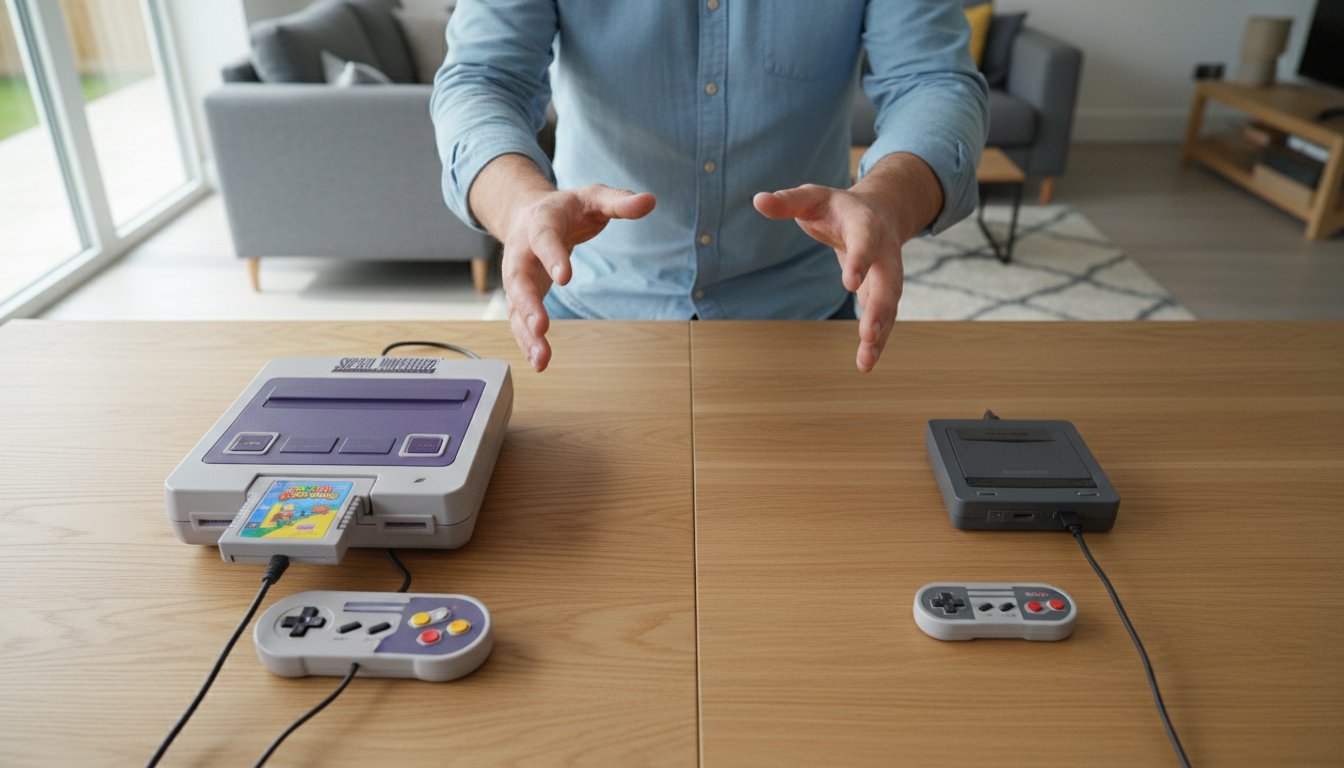
Diving into the world of classic gaming is an incredible journey, but your first stop is a crucial one. Do you go for the authentic, original hardware that defined an era, or the modern, convenient ‘mini’ console? This is the core debate for anyone looking to get their fix of nostalgia: authenticity versus convenience. There’s no wrong answer here-only the path that’s perfect for you. Let’s break down the pros and cons of each approach to help you find your ideal setup for enjoying classic and retro consoles.
The Magic of Authentic Hardware (The Real Deal)
This is the purist’s path. Holding an original SNES controller or slotting a Mega Drive cartridge into the console is an experience that can’t be replicated. This is the hardware that shaped the history of video game consoles, offering the exact look, feel, and sound its creators intended.
- Pros: You get the true, unfiltered experience, from the unique sound of the disc drive to the exact feel of the controller. It also opens up the wonderful world of collecting physical games, boxes, and manuals.
- Cons: Older electronics can be temperamental and may require maintenance, like replacing capacitors. Connecting them to a modern 4K TV can also be a headache, often requiring specialist cables or upscalers to look good.
The Convenience of Modern ‘Mini’ Consoles
In recent years, manufacturers like Nintendo and SEGA have released miniature, plug-and-play versions of their iconic systems. These ‘mini’ consoles are designed for instant gratification, offering a curated slice of gaming history with zero fuss. They are a fantastic gateway into the world of retro consoles for casual players.
- Pros: Setup is incredibly simple-just plug in an HDMI cable and you’re ready to play. They often come pre-loaded with a fantastic, curated list of classic, must-play titles.
- Cons: The game library is usually fixed and cannot be expanded. While emulation is very good, it’s not always 100% perfect, and hardcore fans may notice minor differences in sound or input lag.
Which Path is Your Perfect Fix?
So, how do you choose? It all comes down to what you want from your retro experience. If you’re a dedicated collector, a purist who craves that authentic 90s feel, or someone who loves the thrill of the hunt for physical games, then original hardware is your calling. If you just want a quick, easy, and affordable way to replay some childhood favourites on your modern TV, a mini console is a brilliant, hassle-free choice. For those who want the best of both worlds, consider a modded original console, which offers the authentic feel with modern conveniences like HDMI output.
A Tour of Iconic Home Consoles That Defined Gaming
Every great collection of retro consoles starts with a titan of the living room. These machines weren’t just boxes that played games; they were cultural icons, each with a unique personality and a library of cherished classics that defined generations. From the blocky charm of 8-bit to the dawn of 3D polygons, choosing the right system is about finding the home for your favourite memories. If you’re weighing up all the different ways to play today, a comprehensive retro gaming console guide can be a huge help. Let’s dive into the essential systems every enthusiast needs to know.
The 8-Bit Era: Nintendo Entertainment System (NES)
This is where it all began for so many of us. The NES didn’t just launch franchises; it single-handedly revived the home video game industry in the ’80s. Its vibe is pure, unfiltered challenge. Games were tough, but the feeling of finally conquering a level was legendary. This is the foundational system, a must-own for anyone who appreciates the roots of modern gaming.
- Must-Play Games: Super Mario Bros. 3, The Legend of Zelda, Metroid
The 16-Bit War: Sega Mega Drive vs. Super Nintendo (SNES)
The fiercest rivalry in gaming history gave us two of the greatest consoles ever made. Choosing a side was a playground rite of passage. The Sega Mega Drive was all about speed, attitude, and bringing the arcade experience home with its signature ‘blast processing’. In the other corner, the SNES delivered deeper, more colourful worlds, with rich RPGs and some of the most beautiful soundtracks ever composed.
- Mega Drive Classics: Sonic the Hedgehog 2, Streets of Rage 2
- SNES Legends: Super Metroid, The Legend of Zelda: A Link to the Past
The Jump to 3D: Nintendo 64 & Sony PlayStation (PS1)
Gaming was never the same after these two arrived. The Nintendo 64, with its revolutionary analogue stick and four controller ports, became the undisputed king of local multiplayer. The PS1, meanwhile, harnessed the power of CD-ROMs to deliver cinematic storytelling, epic RPGs, and groundbreaking new franchises that felt more mature and ambitious than anything before it.
- N64 Party Starters: GoldenEye 007, Mario Kart 64
- PS1 Game-Changers: Final Fantasy VII, Metal Gear Solid
The Best Retro Handhelds for Gaming on the Go
For many of us, the golden age of gaming wasn’t just on a TV screen-it was in the palm of our hands, on the school bus, or under the covers long after bedtime. Handhelds created some of the most dedicated fanbases in gaming history, and their pocket-sized adventures are cherished memories. The history of these devices is just as rich as the timeline of classic gaming consoles they grew up alongside. Today, these systems are perfect for collecting, modding, and recapturing that on-the-go magic. Let’s find the handheld that fits your pocket and your passion.
The Undisputed King: The Nintendo Game Boy Family
From the iconic grey brick (DMG) and the sleek Pocket to the vibrant Game Boy Color and the 32-bit power of the Game Boy Advance and SP, this family ruled the handheld world for over a decade. Its success comes down to three things: an unbeatable library of games, near-indestructible build quality, and a modern-day reputation for being incredibly mod-friendly. Upgrading an original with a backlit IPS screen and a new shell turns a classic into a premium gaming device. These are essential retro consoles for any collection.
- Must-Play Games: Pokémon Red/Blue, The Legend of Zelda: Link’s Awakening DX, Tetris, Metroid Fusion.
Want to breathe new life into an old friend? Check out our Game Boy mods and freshen up a classic!
The Colourful Contender: Sega Game Gear
In 1990, the Sega Game Gear was a vision of the future. While Nintendo stuck with monochrome, Sega delivered a full-colour, backlit screen that felt like a portable Master System. The reality, however, was a system notorious for its six-AA-battery appetite and capacitors that fail over time. Because of this, a working, un-modded Game Gear is a rare find. For the dedicated hobbyist, though, performing a full re-cap and screen upgrade transforms it into the stunning handheld it was always meant to be.
The Pocket Powerhouse: Sony PlayStation Portable (PSP)
The PSP was a monumental leap forward, offering near-PlayStation 2 quality graphics and multimedia functions in a sleek package. It wasn’t just a games machine; it was an entertainment device. Its library is packed with stunning console-quality experiences and unique titles that pushed the limits of handheld gaming. The PSP is also a legend in the homebrew community, making it a versatile choice for playing both its official UMD library and a huge range of emulated classics.
- Must-Play Games: God of War: Chains of Olympus, Lumines, Metal Gear Solid: Peace Walker.
Your Checklist: What to Look For When Buying a Used Retro Console
Diving into the world of classic gaming is a thrill, but buying electronics that are 20, 30, or even 40 years old requires a keen eye. These cherished machines have seen decades of use, and knowing what to look for is what separates a nostalgic bargain from a heartbreaking bust. Use this checklist to avoid the common pitfalls and find a gem that will give you years of joy. This is why buying from a specialist is often the safest bet to get your fix.
Physical Condition: Beyond a Few Scratches
Cosmetic wear is expected, but some issues are red flags for deeper problems. A well-cared-for console tells a story of love; a neglected one hints at future headaches. When you’re inspecting potential retro consoles, look closely at the following:
- Plastic Discolouration: Is that SNES a sickly yellow instead of its iconic grey? This is a tell-tale sign of prolonged UV exposure, which can make the plastic brittle.
- Cracks and Damage: Look for deep gouges, significant cracks, or broken plastic, especially around controller and cartridge ports which see the most action.
- Handheld Screens: For portables like the Game Boy or DS, check the screen carefully in good light. Look for dead pixels, dark spots (screen rot), or deep scratches that will spoil your gaming experience.
The Essentials: Cables, Controllers & Power
A console is useless without the right gear to power it up and play. A bundle might seem like a great deal, but the quality of the accessories is paramount. Ask yourself if it comes with an official, sturdy controller or a cheap, flimsy third-party one that will break in a week. Ensure it includes the correct AV cables for a clear picture and, most importantly, the correct power supply. Many a classic console has been fried by a faulty, non-original power adapter with the wrong voltage.
Why Buy From a Specialist Like MyRetroFix?
Navigating this minefield can be daunting. That’s where we come in. When you buy from a specialist, you sidestep the ‘as-is’ lottery of auction sites and car boot sales. Every single console we sell is rigorously tested, professionally cleaned, and fully guaranteed to work perfectly out of the box. We replace failing components and often refurbish our stock to be even better than it was new, ensuring it’s ready for the next generation of players. Don’t take a chance on a dusty relic from a loft; invest in a piece of gaming history you can rely on.
Ready to find your perfect machine without the risk? Browse our stock of guaranteed retro consoles now!
Your Retro Gaming Adventure Awaits
The journey into gaming’s golden age is one of the most rewarding quests a player can undertake. Whether you’ve decided on the pure authenticity of original hardware or the plug-and-play convenience of a modern ‘mini’, you’re now equipped to make the perfect choice. From the living room legends that defined generations to the handheld heroes that kept us gaming on the go, you have the knowledge to confidently start your collection and recapture that classic magic.
Finding the right machine is just the start of the fun. At MyRetroFix, we’re more than a store; we’re fellow enthusiasts dedicated to preserving these classics. As specialists in rare and imported hardware, we don’t just sell retro consoles-we meticulously restore them. With our professional repair and modification services, you can get the ultimate experience from your cherished system. Best of all, every used console we sell is rigorously tested and guaranteed, giving you complete peace of mind.
Ready to start your collection? Get your fix of authentic retro consoles here!
An unforgettable journey into gaming history is waiting. Power on and play!
Frequently Asked Questions
How do I connect a retro console to a modern HD or 4K TV?
Most retro consoles output an analogue signal (like RF, Composite, or SCART) which modern TVs handle poorly. For a simple plug-and-play solution, a basic SCART-to-HDMI adapter will work. For the best possible picture quality, we recommend a dedicated upscaler like a RetroTINK or an OSSC. These devices are designed to correctly interpret the signal from your classic hardware, providing a sharp, lag-free image that looks fantastic on a modern display.
Are old games and consoles reliable after 30 years?
You’d be surprised! Many classic systems were built like tanks and are still going strong. However, electronic components like capacitors can degrade over time. That’s why we thoroughly test, clean, and refurbish our retro consoles before they reach you. This often includes a full “re-cap” to replace old capacitors, ensuring your console runs reliably for many more years of nostalgic gaming bliss. It’s a passion we take seriously.
What is the difference between PAL, NTSC-U, and NTSC-J consoles and games?
These are the three main regional video standards. PAL is for Europe (including the UK) and Australia, NTSC-U is for North America, and NTSC-J is for Japan. The biggest difference for gamers is speed; NTSC games run at a full 60Hz, while PAL games are optimised for 50Hz, often making them run slower with borders on the screen. Generally, you need a console from the same region as the game, though we also specialise in modified, region-free consoles.
Can you still save your progress on old game cartridges with batteries?
Yes, but the original batteries are often well past their lifespan. Many cartridges from the 8-bit and 16-bit eras used a small internal battery to hold your save data. After 20-30 years, most of these have run flat. The great news is that these batteries can be replaced! We check the games we sell and offer a battery replacement service to ensure your epic adventure on The Legend of Zelda won’t be lost.
Is it worth getting a retro console modified with new screens or video outputs?
For the dedicated enthusiast, absolutely! A modification can breathe new life into classic hardware. Installing a modern backlit IPS screen in a Game Boy Color makes it brilliantly playable in any light, while an RGB or HDMI modification for a Nintendo 64 will provide a stunningly sharp and vibrant picture on your 4K TV. Mods are all about enhancing the original experience and getting the very best performance from your cherished consoles.
What’s the best way to clean old consoles and game cartridges?
For the console’s outer shell, use a lightly damp microfibre cloth. To get games working, the contacts are key. Dip a cotton bud in high-purity isopropyl alcohol (99% is best) and gently scrub the metal contacts on the cartridge. You’ll be amazed at the dirt that comes off! Let it dry completely before use. This simple trick is the number one fix for games that won’t load, bringing countless classics back from the dead.